

 CN
CN


In the production, scientific research experiments and teaching activities of enterprises, the safety management of hazardous chemicals and hazardous waste has always been an unavoidable topic. The high approval difficulty, long construction cycle and high investment cost of Class A warehouses have put many enterprises in the dilemma of "wanting to be compliant but having nowhere to store". As a result, various types of temporary storage cabinets have emerged — with their characteristics of flexibility, high efficiency and compliance, they have become "mobile safety warehouses" for more and more enterprises.
However, faced with a wide range of hazardous chemicals storage cabinets, hazardous waste storage cabinets on the market, as well as the integrated temporary storage cabinets that have emerged in recent years, many users are confused: What exactly are the differences between them? Which one should my enterprise choose? This article will systematically sort out the characteristics of these three types of temporary storage cabinets to help you make the right choice.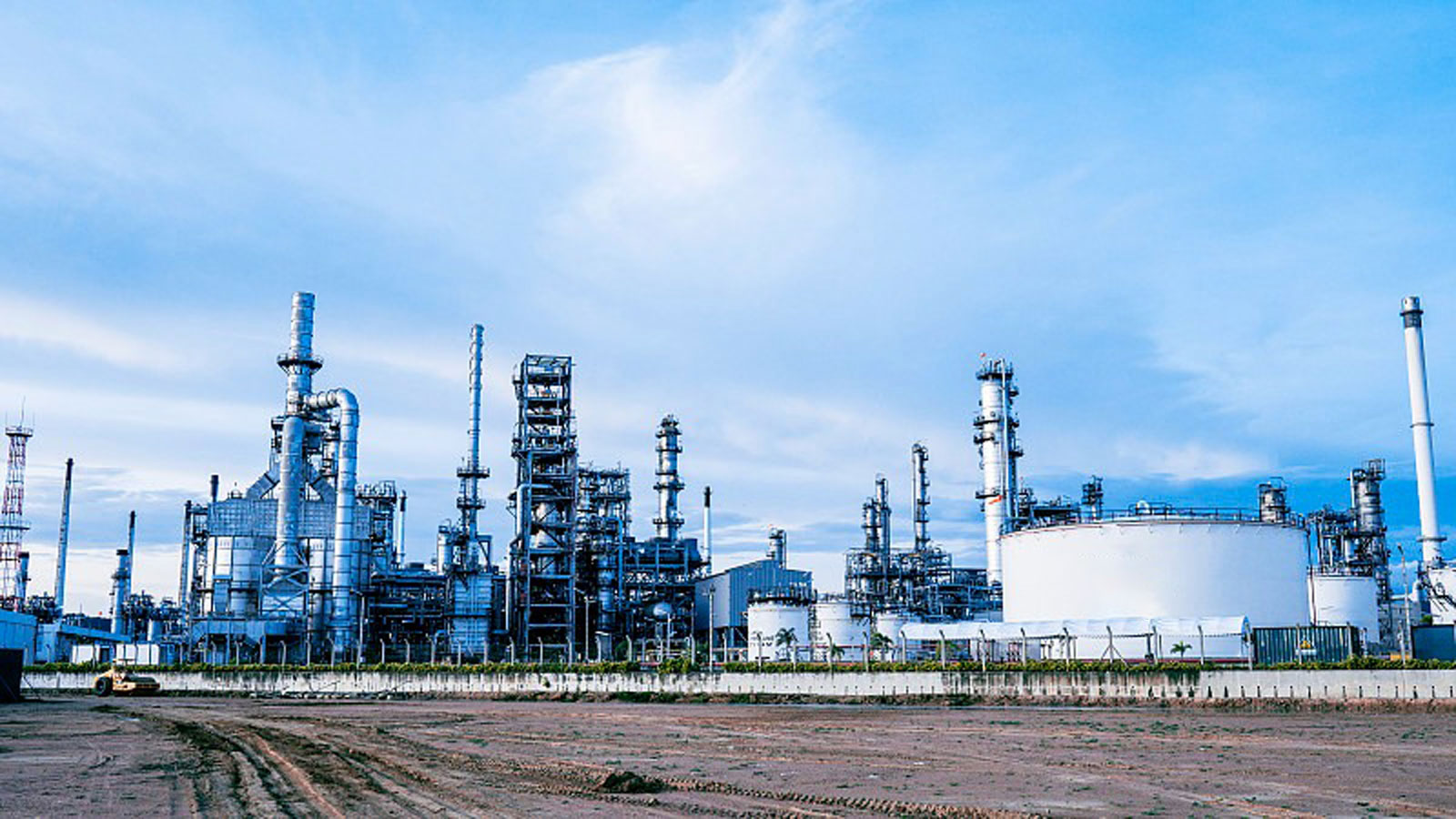
I. Hazardous Chemicals Storage Cabinets: A Safety Barrier for "In-use Chemicals"
Hazardous chemicals storage cabinets are special airtight cabinets used for temporarily storing a small amount of hazardous chemicals, and their safety performance is directly related to personnel safety and the smooth progress of production. These temporary storage cabinets store hazardous chemicals that have not been used and still have use value, so their core task is to ensure that they do not leak, deteriorate or cause safety accidents during storage.
From the perspective of core functions, hazardous chemicals storage cabinets mainly highlight three major protections:
- In terms of fire and explosion protection, the cabinet body usually adopts a structure of double-layer steel plates plus fireproof and heat-insulating cotton, with a fire resistance duration of up to 90 minutes or even more than 4 hours.
- In terms of leakage prevention, a leakage-proof tray is set at the bottom of the cabinet body with a volume not less than 110% of the volume of the largest container in the cabinet, which can effectively collect waste liquid in case of leakage and prevent diffusion.
- In terms of material matching, cabinets of different materials need to be selected for different types of chemicals: fireproof metal cabinets for flammable liquids, PP material or corrosion-resistant coated metal cabinets for corrosive chemicals, and sealed cabinets with ventilation vents connected to waste gas treatment systems for toxic or volatile substances.
Hazardous chemicals storage cabinets provide a rich selection of capacities.
Indoor small cabinets usually have a capacity between 30L and 500L, suitable for small-scale use scenarios such as laboratories;
Outdoor walk-in cabinets can hold several tons of chemicals, suitable for large-scale storage needs such as chemical enterprises and pharmaceutical workshops. In terms of applicable scenarios, such temporary storage cabinets are widely used in biopharmaceuticals, university laboratories, scientific research institutions and other places with demand for hazardous chemicals use.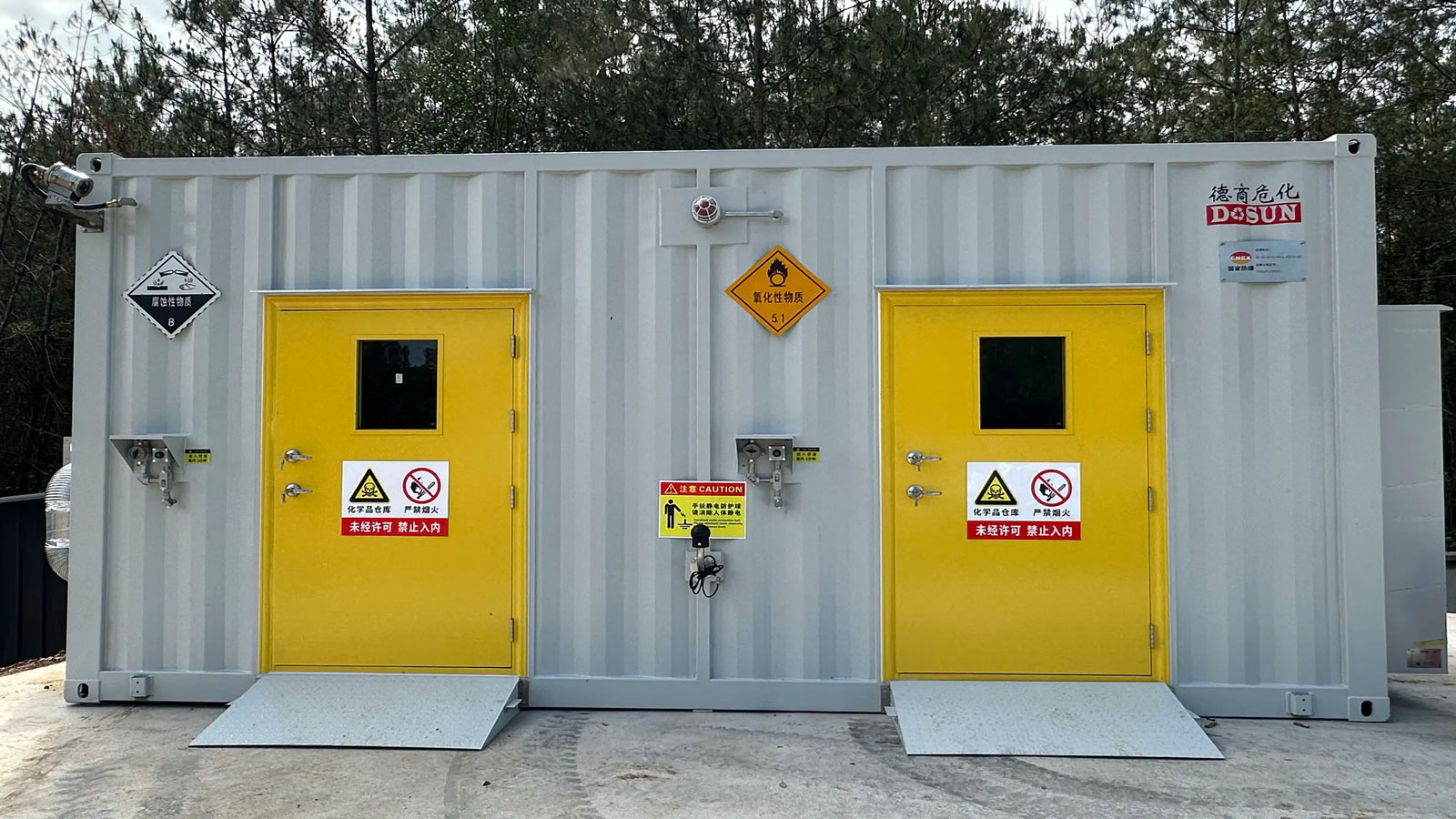
II. Hazardous Waste Storage Cabinets: An Environmental Protection Line for Controlling "Waste Chemicals"
Hazardous waste storage cabinets are specially used to store hazardous waste that has lost its use value and requires professional disposal, such as waste reagent bottles, waste solvent barrels, and waste chemical containers. Although these wastes are no longer used in production, their hazards have not disappeared, and may even be more dangerous due to complex components and aging containers.
According to statistics from the Ministry of Ecology and Environment, China produces more than 100 million tons of hazardous waste every year. Improper disposal will not only cause environmental crises such as soil pollution and water body damage, but also may cause major safety accidents such as fires and explosions. Therefore, the design focus of hazardous waste storage cabinets is more inclined to environmental pollution prevention and control, and the core standard followed is Standard for Pollution Control on Hazardous Waste Storage (GB 18597).
In terms of functional characteristics, hazardous waste storage cabinets also have basic protections such as fire prevention, explosion protection and leakage prevention, but their anti-seepage requirements are more stringent. The ground and wall skirts must undergo professional anti-seepage and anti-corrosion treatment to ensure that the permeability coefficient is lower than the standard limit. In addition, hazardous waste storage cabinets particularly emphasize zoned and classified storage. Storage areas must be divided according to waste types and compatibility, and obvious special signs must be set up.
In terms of management, hazardous waste storage cabinets require the implementation of a "double-person double-lock" system, and the establishment of a full-process traceable ledger from warehousing to ex-warehousing to ensure that the source and destination of waste are traceable.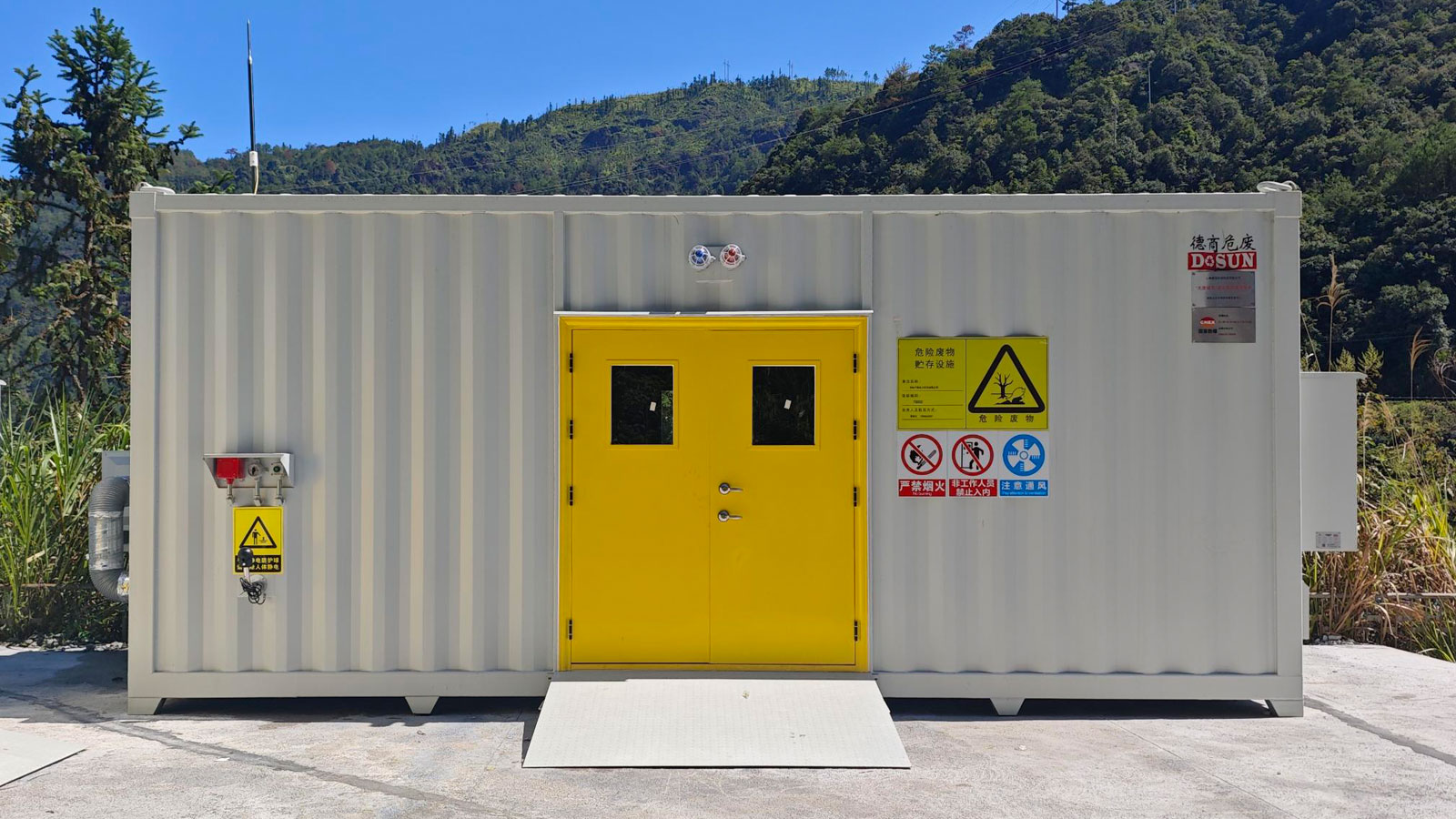
III. Core Differences Between Hazardous Chemicals and Hazardous Waste Storage Cabinets
After understanding the basic concepts of the two types of temporary storage cabinets, we can see their essential differences from the following dimensions:
Different storage objects
Hazardous chemicals storage cabinets store hazardous chemicals to be used, which have use value; hazardous waste storage cabinets store hazardous waste to be disposed of, which have no use value. This point determines the fundamental differences between the two in management and disposal processes.
Different standards followed
Hazardous chemicals storage cabinets are mainly designed in accordance with standards such as General Rules for Storage of Hazardous Chemicals Warehouses (GB 15603); hazardous waste storage cabinets must strictly comply with the requirements of Standard for Pollution Control on Hazardous Waste Storage (GB 18597). The two types of standards have different focuses: the former focuses on safety protection during storage, while the latter takes into account both storage safety and pollution prevention.
Different management requirements
Hazardous chemicals storage cabinets need to establish access ledgers and keep daily entry and exit records; hazardous waste storage cabinets have stricter management, requiring not only double-person double-lock, but also the establishment of detailed ledgers on hazardous waste types, quantities, storage time, destinations, etc., and regular reporting to environmental protection departments.
Different protection focuses
Although both types of temporary storage cabinets have functions such as fire prevention, explosion protection and leakage prevention, hazardous chemicals storage cabinets place more emphasis on preventing chemicals from deteriorating or causing accidents during storage; hazardous waste storage cabinets pay more attention to preventing environmental pollution caused by hazardous waste leakage, and anti-seepage and classified storage are the core requirements.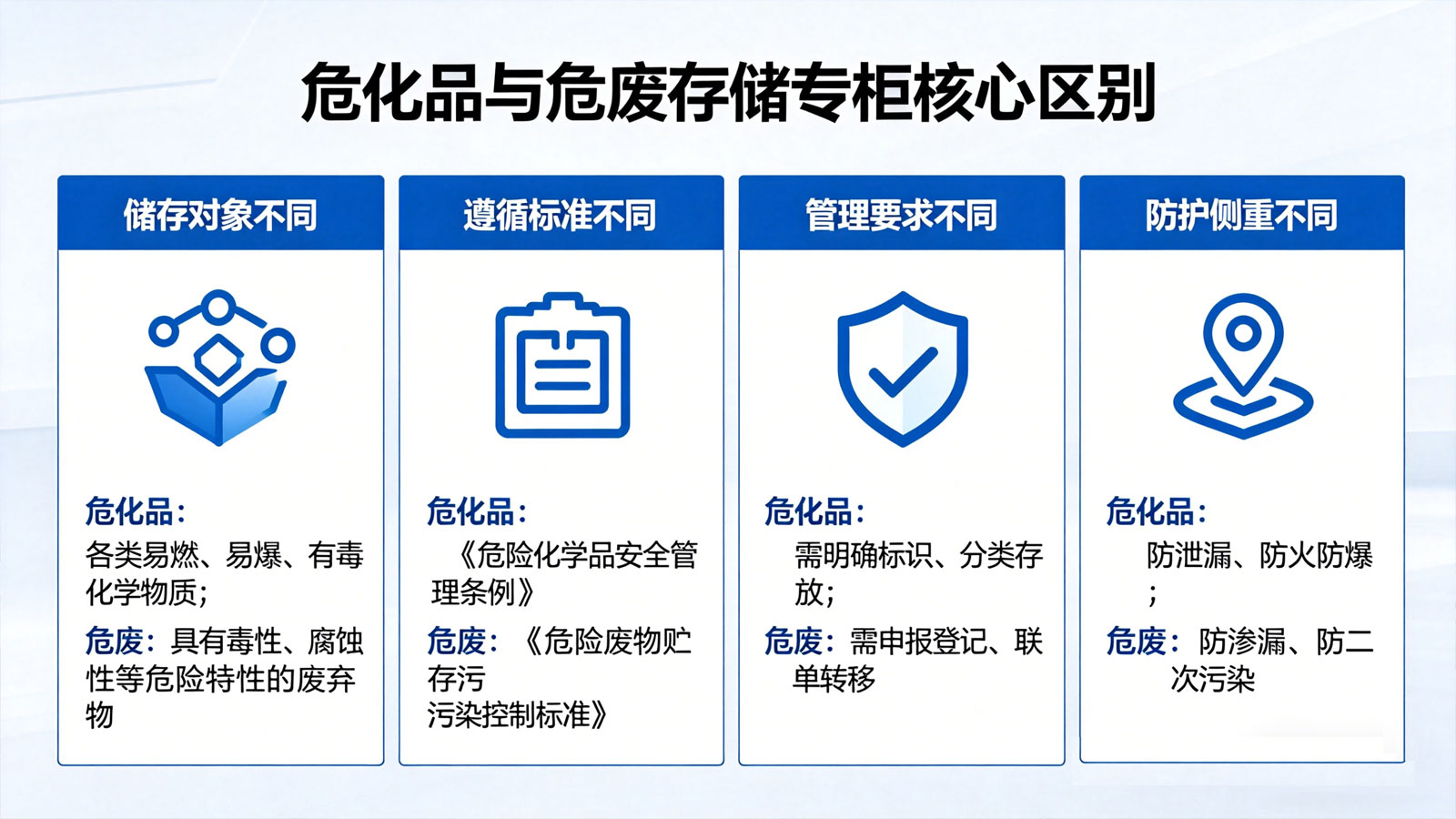
IV. Integrated Hazardous Chemicals and Hazardous Waste Storage Cabinets: An Intelligent Choice for Integration
With the continuous improvement of safety and environmental protection requirements, a type of "integrated storage cabinet" that has both temporary storage functions for hazardous chemicals and hazardous waste has gradually entered the market. Such products integrate the two types of storage needs into the same intelligent system and have become the preferred solution for more and more enterprises.
Integrated storage cabinets adopt a modular zoning design, dividing the interior of the cabinet body into a hazardous chemicals storage area and a hazardous waste storage area, which are independently configured in accordance with the corresponding national standards.
At the hardware level, it meets both the fire and explosion protection requirements for hazardous chemicals storage and the anti-seepage and classified storage requirements for hazardous waste storage; at the software level, it realizes unified monitoring and management through Internet of Things technology.
The core advantages of integrated storage cabinets are reflected in the following aspects:
First, saving space and cost. One device can meet two types of storage needs, especially suitable for small and medium-sized enterprises with limited factory area, avoiding the site and capital pressure caused by purchasing multiple devices separately.
Second, integrated management. By integrating 12 types of environmental sensors, 4G/5G IoT modules and an AI algorithm platform, it realizes real-time monitoring of parameters such as temperature, humidity and VOC concentration, and supports automatic alarm and emergency disposal for abnormal situations.
Third, full-process traceability. Through the "cloud management" system, users only need to scan codes to generate exclusive labels, complete marks such as personnel authorization, record waste generation dates and category details, and conduct full-process information tracking and management of core links such as hazardous waste generation, collection, storage and disposal.
Fourth, flexible movement. Compared with civil construction warehouses, the construction cycle of integrated storage cabinets can be shortened by 80%, and they support relocation and movement, which greatly reduces the fixed asset burden of enterprises.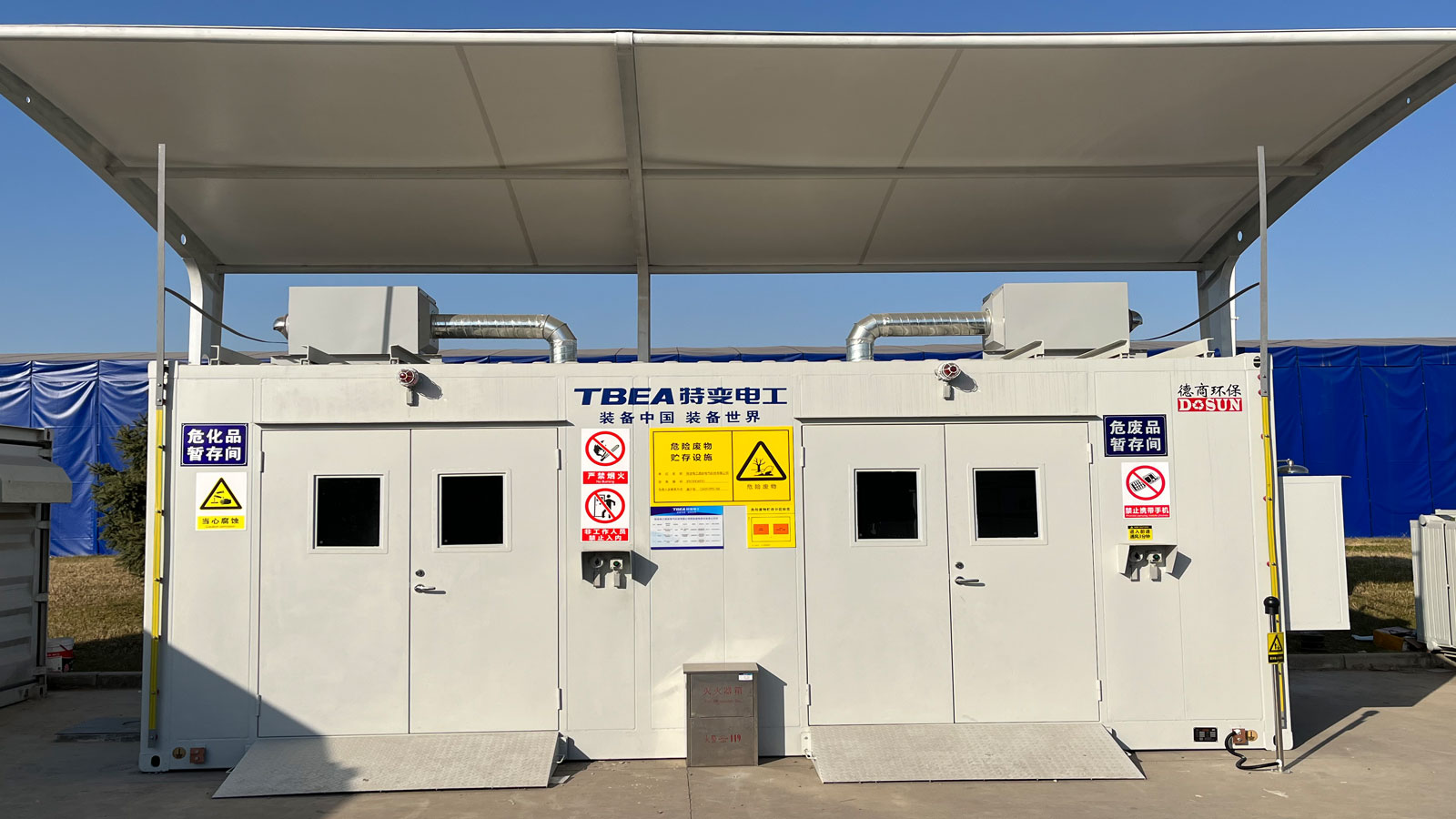
V. How to Choose: Three Steps to Find the Most Suitable Temporary Storage Cabinet
Faced with multiple choices, it is recommended that enterprises make decisions according to the following steps:
Step 1: Clarify the storage objects
If the enterprise only needs to temporarily store hazardous chemicals to be used, it is enough to choose a professional hazardous chemicals storage cabinet; if it only generates hazardous waste that needs temporary storage, choose a hazardous waste storage cabinet; if both needs exist, an integrated storage cabinet is often a more economical and efficient choice.
Step 2: Verify compliance standards
When purchasing, be sure to confirm whether the product holds nationally recognized test reports and certifications. Hazardous chemicals storage cabinets need to comply with relevant standards such as GB 15603, hazardous waste storage cabinets need to meet the requirements of GB 18597, and integrated storage cabinets need to meet the compliance requirements of both standards at the same time. Never buy "three-no" products without qualifications and test reports.
Step 3: Evaluate actual needs
According to the storage types, quantities, site conditions and budget, select the appropriate capacity, size and functional configuration. Indoor scenarios focus on sealing and corrosion resistance, while outdoor scenarios need to pay additional attention to environmental adaptability such as rain protection, lightning protection and collision prevention. In addition, it is recommended to give priority to products with intelligent monitoring and remote management functions to improve daily operation and maintenance efficiency and safety management level.
Conclusion
From single hazardous chemicals storage cabinets to professional hazardous waste storage cabinets, and then to integrated integrated storage cabinets, safe storage technology is evolving towards a more intelligent, efficient and environmentally friendly direction. No matter which type of product is chosen, safety and compliance are always the bottom line that cannot be crossed. It is hoped that this article can help you sort out your ideas and find the most suitable safe storage solution for your enterprise's needs, so as to build a solid defense line for production and environmental safety.
 New
New
- 1 Choosing the Right Hazardous Waste Temporary Storage Cabinet Is Only the First Step; Poor Daily Management Still Fails Environmental Protection Inspections 2026-09-16
- 2 DeSUN ECOTECH Intelligent Battery Storage Cabinets Enter German Market; One-Stop Delivery Reinforces Battery Safety Defense 2026-09-09
- 3 New Specifications for Gas Cylinder Storage: Analysis of Intelligent Explosion-Proof Solutions for Both Indoor and Outdoor Scenarios 2026-09-02
- 4 30 Sets of Customized Non-Standard Hazardous Waste Containers Exported to Kazakhstan: Why DeSUN ECOTECH Earns Trust? 2026-08-27
- 5 DeSUN ECOTECH Flammable Liquid Safety Storage Cabinet Passes SGS 90-Minute Fire Test and Earns Type 90 Certification 2026-08-19
 Hot
Hot
- 1 Intelligent Environmental Protection: What Makes a Good Hazardous Waste Temporary Storage Cabinet? DeSUN ECOTECH Provides the Answer 2026-04-15
- 2 Hazardous Waste and General Solid Waste: Comprehensive Analysis of Identification Standards, Treatment Methods and DeSUN ECOTECH Solutions 2026-04-09
- 3 Hazardous Chemicals and Hazardous Waste Temporary Storage Cabinets: How to Choose the Right "Safety Steward"? A Comprehensive Guide to Differences and Selection 2026-04-22
- 4 Safety Standards for Outdoor Gas Cylinder Cabinets: Multi-dimensional Environmental Protection to Build a Strong Defense Line for Outdoor Storage Safety 2026-02-26
- 5 Shanghai DeSUN ECOTECH CO., Ltd – Selected as a 2025 Shanghai "Specialized, Refined, Differential and Innovative (SRDI)" Small and Medium-sized Enterprise 2025-09-04



- About Us Company Profile Corporate Culture Corporate Awards
- Solutions Hazardous Waste Storage Solutions Hazardous Chemical Storage Solutions Gas Cylinder Storage Solutions Battery Storage, Transfer, and Charging Solutions Intelligent Transfer Solutions
- Products Hazardous Waste Storage Cabinets Hazardous Chemical Storage Cabinets Intelligent Gas Cylinder Storage Cabinets Intelligent Battery Storage Cabinets Intelligent Transfer Containers More Products
-
Customer Cases
By Product
Category - News Corporate News Industry News
- Contact Us Contact Us
 沪公网安备31011402021669号
-
 Online Message


- Online Message