

 CN
CN


Temporary storage of hazardous waste is a key link in environmental risk prevention and control. According to statistics from the Ministry of Ecology and Environment (MEE), China produces about 80 million tons of hazardous waste every year, and a considerable number of accidents stem from poor management or substandard facilities in the storage link. A qualified hazardous waste temporary storage cabinet is not only a "safety valve" for the compliant operation of enterprises, but also the basic hardware for implementing the construction of "Zero-Waste Cities" and realizing the full life cycle management of hazardous waste. However, the quality of temporary storage cabinet products on the market varies greatly, and enterprises often face the confusion of "what to choose and how to choose". What exactly makes a good hazardous waste temporary storage cabinet? National standards set the bottom line, while excellent products provide more safety and intelligent guarantees beyond the standards.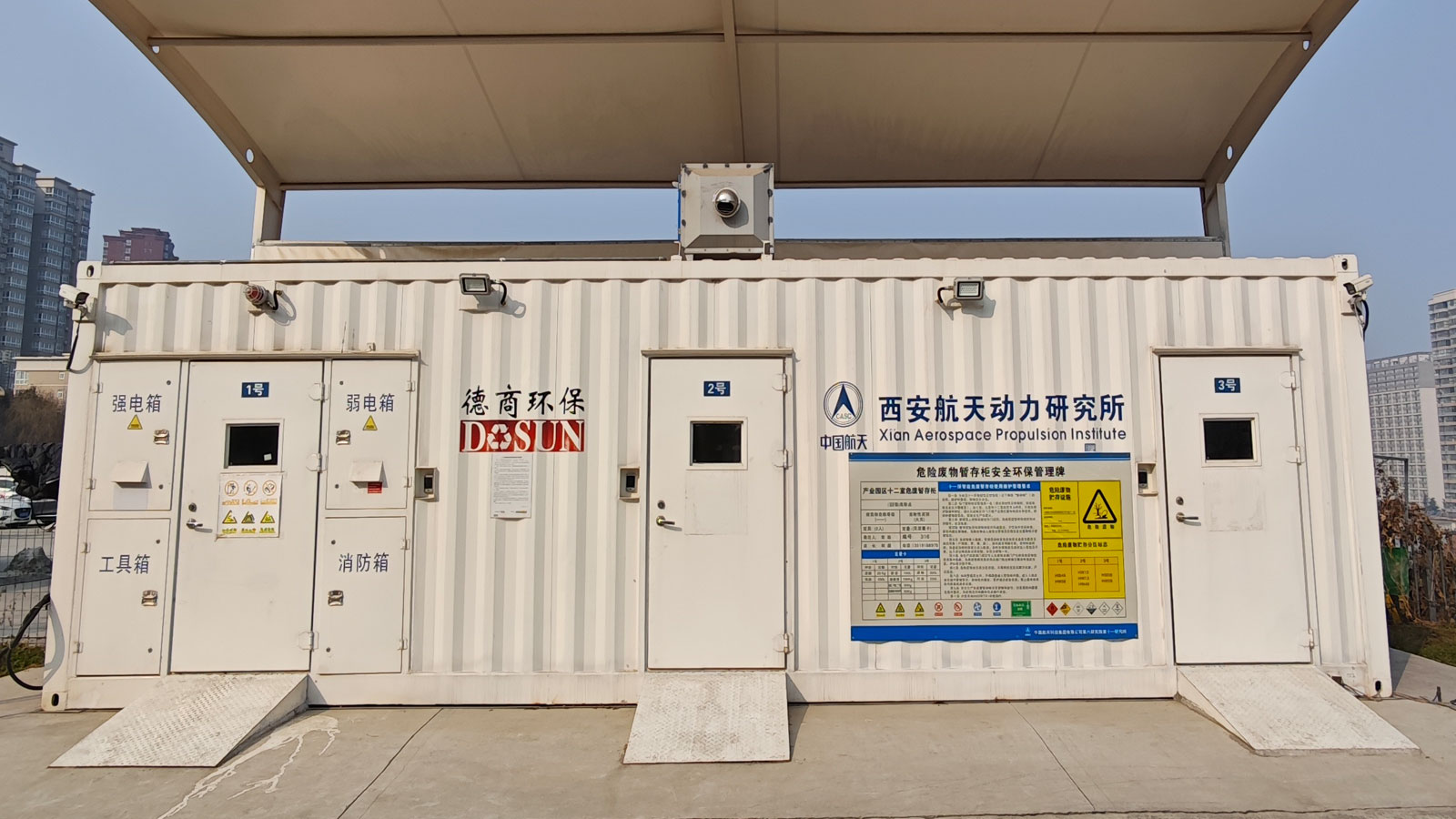
I. What Standards Must a Good Hazardous Waste Temporary Storage Cabinet Meet?
In July 2023, the new version of the Standard for Pollution Control on Hazardous Waste Storage (GB 18597-2023) was officially implemented. It subdivides storage facilities into four categories: storage warehouses, storage yards, storage ponds and storage tank farms, significantly raises technical requirements for anti-seepage, anti-corrosion, waste gas collection, etc., and adds a special chapter on environmental emergency management for the first time. Faced with increasingly stringent regulations, how can enterprises judge whether a hazardous waste temporary storage cabinet is "good"? The judgment criteria can be started from the following four dimensions.
First, Site Selection and Building Structure
A good temporary storage cabinet must first be placed in an independent closed or enclosed site dedicated to storing hazardous waste. The foundation must undergo strict anti-seepage treatment. The ground and wall skirts shall be hardened with solid, impermeable and corrosion-resistant materials, and the height of the wall anti-seepage layer shall not be less than 1.2 meters.
Second, Safety and Pollution Prevention Capabilities
This is the core function of temporary storage cabinets. A good product must meet the "three-prevention" requirements of "preventing scattering, loss and leakage", and be equipped with a complete leakage collection system — interception facilities must be set up in the liquid waste area, with a volume that can at least accommodate the volume of the largest container or one-tenth of the total reserves of liquid waste. In addition, cabinets storing volatile waste must be installed with gas collection and purification devices to ensure that waste gas emissions meet the standards.
Third, Functional Zoning and Intelligent Management
Hazardous wastes of different categories and characteristics must be strictly stored in separate zones, and isolation measures such as aisles, partitions or partition walls shall be adopted between zones. Modern hazardous waste management has moved towards digitalization. High-quality temporary storage cabinets should support code scanning entry of hazardous waste information, automatic generation of electronic ledgers, real-time weight monitoring, and realize full life cycle traceability through Internet of Things technology.
Fourth, Fire and Explosion Protection and Emergency Configuration
The cabinet body must pass explosion-proof certification (Ex mark), with a fire resistance rating not lower than Class A and a fire resistance duration not less than 1 hour. At the same time, the volume of the bottom anti-leakage tray must reach more than 110% of the cabinet volume, and a complete lightning protection and anti-static system shall be equipped.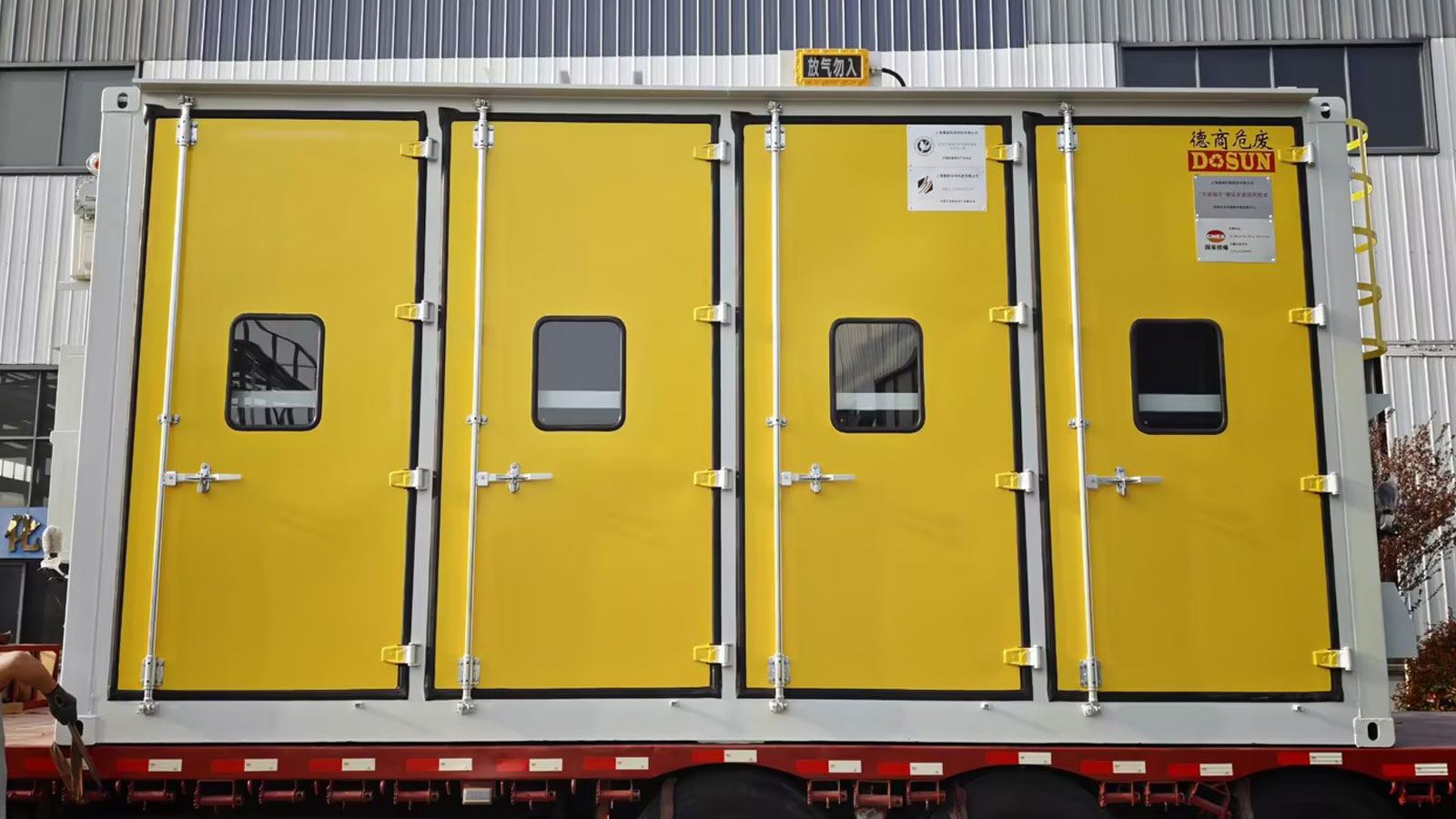
II. DeSUN ECOTECH: Redefining Hazardous Waste Temporary Storage with Intelligent Technology
Among many manufacturers, the intelligent hazardous waste storage cabinets of Shanghai DeSUN ECOTECH CO., Ltd stand out. In 2023, they were selected into the Catalogue of Advanced and Applicable Technologies for "Zero-Waste City" Construction issued by the Ministry of Ecology and Environment of China, and in the same year, they were selected as "2024-2025 (4th Batch) Applicable Technologies for Green Chemical Industrial Parks" by the China Petroleum and Chemical Industry Federation (CPCIF). Founded in 2018, this national high-tech enterprise takes "realizing industrial safety through science and technology" as its mission, introduces advanced German structural design, integrates innovative means such as the Internet of Things and big data, and provides full-process intelligent solutions for chemical, pharmaceutical, scientific research and other fields.
In terms of structural design, DeSUN ECOTECH hazardous waste storage cabinets adopt a 3mm double-layer anti-corrosion steel plate structure, with a permeability coefficient ≤ 1.6×10⁻¹¹ cm/s, which is far superior to the national standard anti-seepage requirements. The cabinet has outstanding fire performance, with a fire resistance duration ≥ 2 hours, and is equipped with a linked dry powder fire extinguishing system with a response time < 10 seconds. The exterior of the cabinet adopts a multi-layer protection system of epoxy zinc-rich primer + micaceous iron oxide intermediate paint + polyurethane topcoat to ensure long-term corrosion resistance.
In terms of intelligence, DeSUN ECOTECH hazardous waste storage cabinets integrate 12 types of environmental sensors, 4G/5G IoT modules and an AI algorithm platform to realize real-time monitoring of parameters such as temperature, humidity and VOC concentration (with an accuracy of ±0.5℃/±0.1ppm), and support automatic alarm and emergency disposal for abnormal situations. Its AI fault prediction accuracy exceeds 95%, key sensors adopt dual-circuit configuration (fault switching time < 500ms), and it can continue 72-hour monitoring + 48-hour emergency lighting after power failure. The system also supports multiple remote access methods such as mobile APP and web pages, greatly improving management convenience.
In terms of management efficiency, compared with traditional civil construction warehouses, DeSUN ECOTECH hazardous waste storage cabinets shorten the construction cycle by 80% (modular installation only takes 7 to 15 days), reduce manual intervention by 80%, and lower operation and maintenance costs by 40%. The intelligent management system supports full life cycle traceability of hazardous waste, quickly enters information through a code scanner and automatically generates electronic ledgers, enabling enterprises to easily meet the mandatory requirements of the new national standard for information management.
From structure to intelligence, from construction to operation and maintenance, DeSUN ECOTECH hazardous waste storage cabinets meet or even exceed national standards in every dimension, providing a high-quality choice that balances safety and efficiency for the hazardous waste storage field.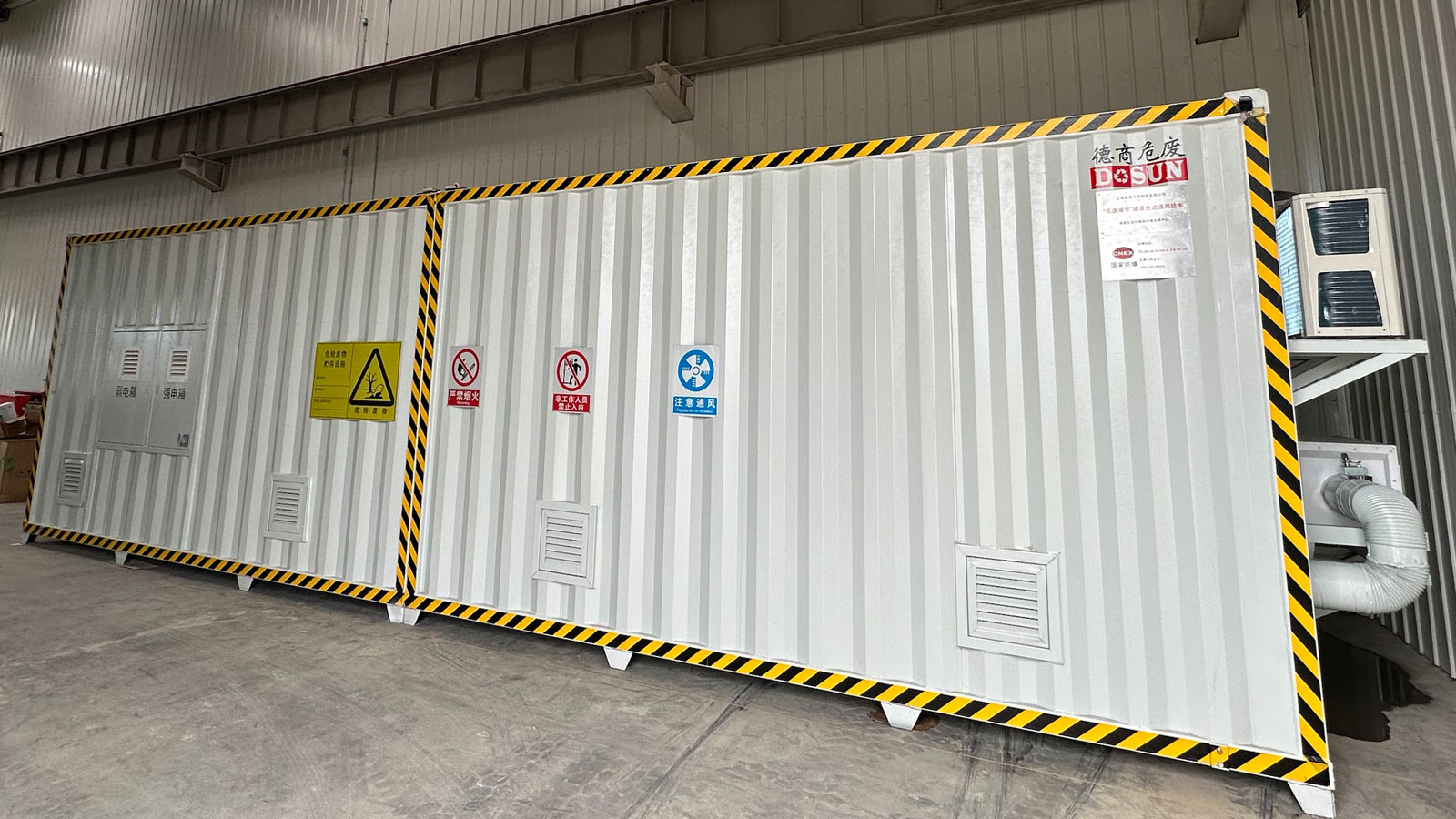
From the national standard bottom line to the technical high line, hazardous waste temporary storage cabinets are no longer simple "iron boxes", but comprehensive environmental protection equipment integrating structural safety, intelligent monitoring and emergency fire protection. For enterprises, choosing a good temporary storage cabinet is not only a rigid requirement to fulfill legal responsibilities, but also an active choice to improve the level of environmental management. DeSUN ECOTECH's practice has proved that combining German rigorous manufacturing technology with China's local Internet of Things innovation can fully create high-quality products that exceed national standards and adapt to complex working conditions. With the in-depth advancement of the construction of "Zero-Waste Cities", hazardous waste temporary storage facilities will surely move towards a more efficient, intelligent and safer direction — and this is the common goal pursued by all practitioners.
 New
New
- 1 Choosing the Right Hazardous Waste Temporary Storage Cabinet Is Only the First Step; Poor Daily Management Still Fails Environmental Protection Inspections 2026-09-16
- 2 DeSUN ECOTECH Intelligent Battery Storage Cabinets Enter German Market; One-Stop Delivery Reinforces Battery Safety Defense 2026-09-09
- 3 New Specifications for Gas Cylinder Storage: Analysis of Intelligent Explosion-Proof Solutions for Both Indoor and Outdoor Scenarios 2026-09-02
- 4 30 Sets of Customized Non-Standard Hazardous Waste Containers Exported to Kazakhstan: Why DeSUN ECOTECH Earns Trust? 2026-08-27
- 5 DeSUN ECOTECH Flammable Liquid Safety Storage Cabinet Passes SGS 90-Minute Fire Test and Earns Type 90 Certification 2026-08-19
 Hot
Hot
- 1 Intelligent Environmental Protection: What Makes a Good Hazardous Waste Temporary Storage Cabinet? DeSUN ECOTECH Provides the Answer 2026-04-15
- 2 Hazardous Waste and General Solid Waste: Comprehensive Analysis of Identification Standards, Treatment Methods and DeSUN ECOTECH Solutions 2026-04-09
- 3 Hazardous Chemicals and Hazardous Waste Temporary Storage Cabinets: How to Choose the Right "Safety Steward"? A Comprehensive Guide to Differences and Selection 2026-04-22
- 4 Safety Standards for Outdoor Gas Cylinder Cabinets: Multi-dimensional Environmental Protection to Build a Strong Defense Line for Outdoor Storage Safety 2026-02-26
- 5 Shanghai DeSUN ECOTECH CO., Ltd – Selected as a 2025 Shanghai "Specialized, Refined, Differential and Innovative (SRDI)" Small and Medium-sized Enterprise 2025-09-04



- About Us Company Profile Corporate Culture Corporate Awards
- Solutions Hazardous Waste Storage Solutions Hazardous Chemical Storage Solutions Gas Cylinder Storage Solutions Battery Storage, Transfer, and Charging Solutions Intelligent Transfer Solutions
- Products Hazardous Waste Storage Cabinets Hazardous Chemical Storage Cabinets Intelligent Gas Cylinder Storage Cabinets Intelligent Battery Storage Cabinets Intelligent Transfer Containers More Products
-
Customer Cases
By Product
Category - News Corporate News Industry News
- Contact Us Contact Us
 沪公网安备31011402021669号
-
 Online Message


- Online Message