

 CN



The core challenge of hazardous chemical management in hospitals often lies not in volume, but in variety. Hospitals use a wide range of chemicals: ethanol, formaldehyde, peracetic acid, glutaraldehyde and chlorine-containing disinfectants for general use; methanol, acetone and chloroform in clinical laboratories; and xylene which is indispensable for pathology departments. None of these chemicals is used in large quantities individually, but the sheer number of categories, high frequency of requisition and scattered usage points create substantial management pressure.
Decentralized storage in various departments may seem convenient for nearby access, but it actually fragments safety risks: inconsistent labeling, mismatched management ledgers, mixed storage of acids, alkalis and oxidizing agents, and even management staff cannot always confirm whether chemicals in adjacent cabinets are compatible with each other. Industry statistics show that compatibility issues account for nearly a quarter of all hidden dangers in hazardous chemical management, and this is by no means a coincidence.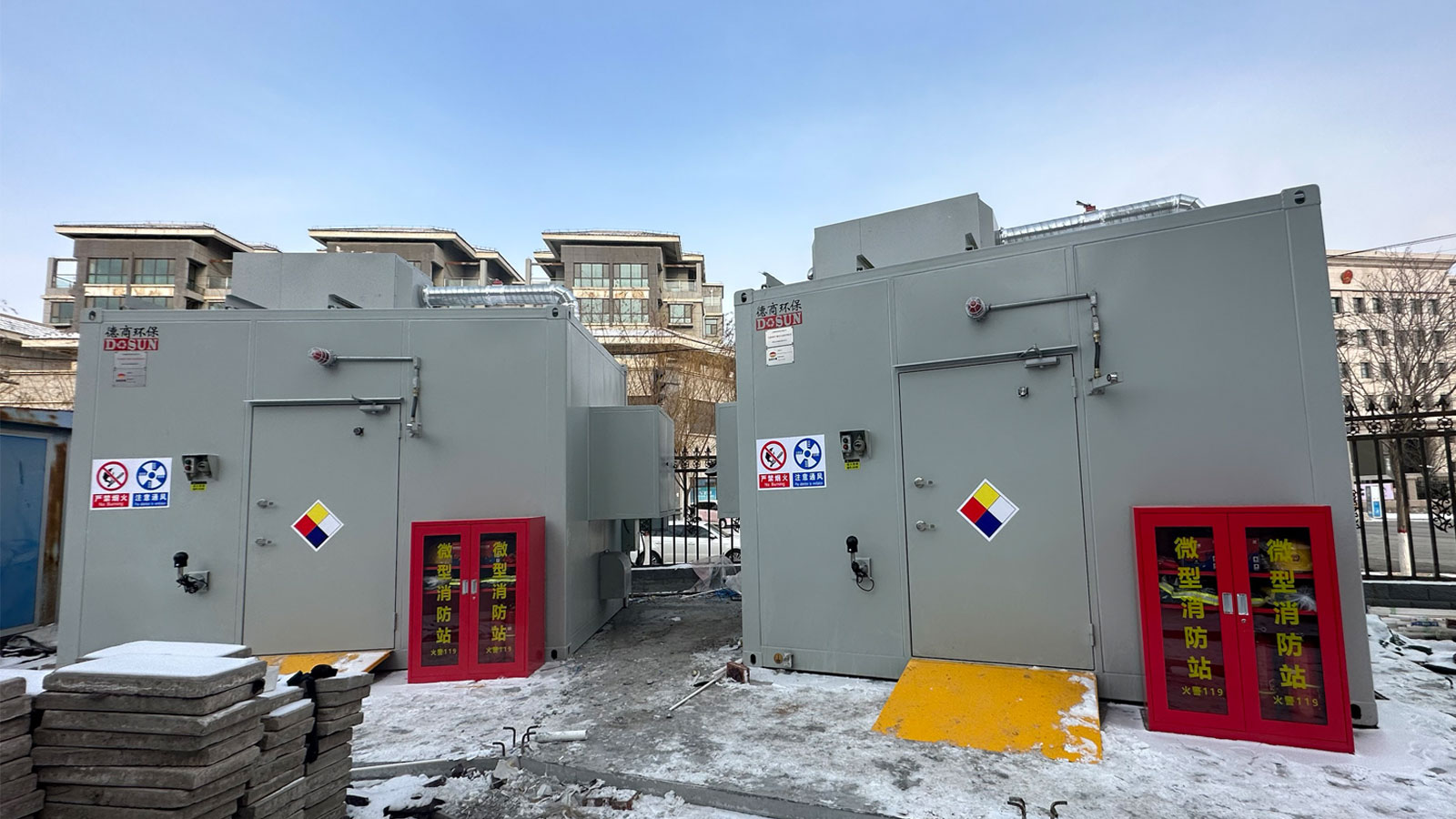
A more practical constraint is site availability.
With high building density and already tight space for medical treatment, scientific research and teaching, most existing hospital campuses can hardly be renovated to build a separate hazardous chemical warehouse that meets fire separation distance and explosion-proof requirements. As a result, a common situation is that hospitals know decentralized storage is non-compliant, but cannot find a place for centralized, adequate and compliant storage.
The crux of the problem is therefore clear: what hospitals need is not a large warehouse to hold all hazardous chemicals, but a storage unit that can realize classified isolation, centralized compliance and zero indoor space occupation within a limited footprint.
Outdoor Storage Cabinets: The Solution to Centralized Compliance When Warehouse Construction Is Not Feasible
Moving hazardous chemicals from indoor departments to dedicated outdoor cabinets first addresses the issues of safety distance and risk isolation in principle. Installed outside densely populated medical areas, the cabinets confine the impact scope of leakage or initial fire to the interior of the cabinet body.
However, this is only the first step. What makes outdoor cabinets a viable option for hospitals is that they integrate a full set of warehouse-level safety configurations into a flexibly deployable cabinet unit.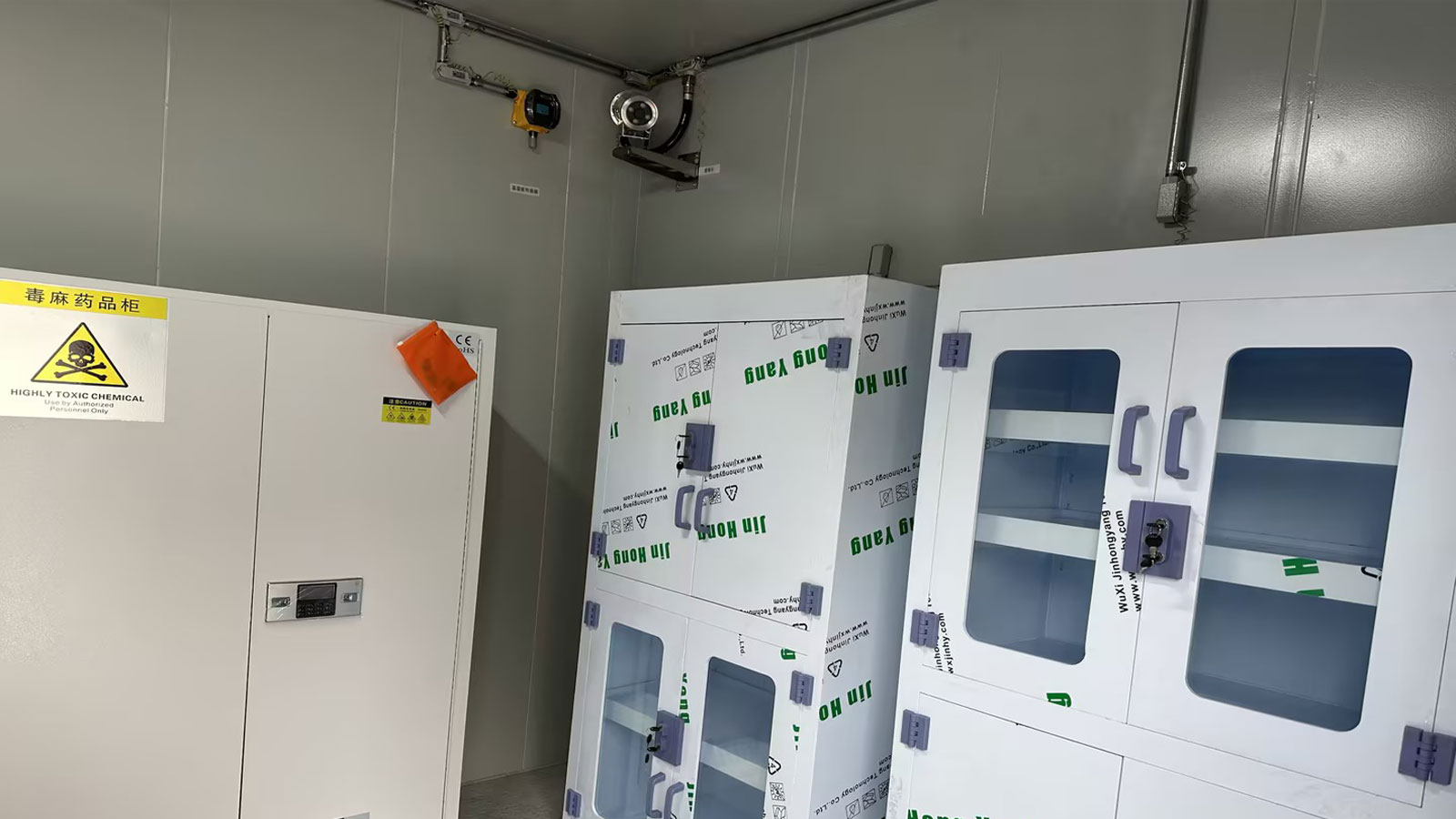
Fire and explosion protection is the bottom line. For the storage of flammable liquid hazardous chemicals, the cabinet body shall have sufficient fire resistance rating, and electrical components shall reach specified explosion-proof grades to eliminate ignition sources at the source.
Classified isolation is the key. Acids, alkalis, oxidizing agents and flammable liquids must not be stored together in the same cabinet. Physical partitions or independent zones inside the cabinet ensure that materials with different hazard properties are placed separately without contact.
Leakage prevention and ventilation are routine safeguards. The bottom collection sump contains accidental drips and leaks, and the ventilation system continuously discharges volatile gases to prevent concentration buildup inside the cabinet.
Monitoring and alarm systems extend the reach of on-site management.Temperature, humidity and combustible gas sensors operate around the clock, sending real-time alerts in case of abnormalities, eliminating the need for frequent manual cabinet-opening inspections.
These requirements are not arbitrary. The group standard *Safety Technical Requirements and Management Specifications for Outdoor Hazardous Chemical Storage Cabinets* (T/BICA 168-2026) issued in 2026 has set systematic provisions for the safety design and management of outdoor cabinets, and DeSUN ECOTECH is one of the drafting units of this standard. This means that a compliant outdoor storage solution follows well-defined rules from the model selection stage, rather than requiring remedial measures at acceptance inspection.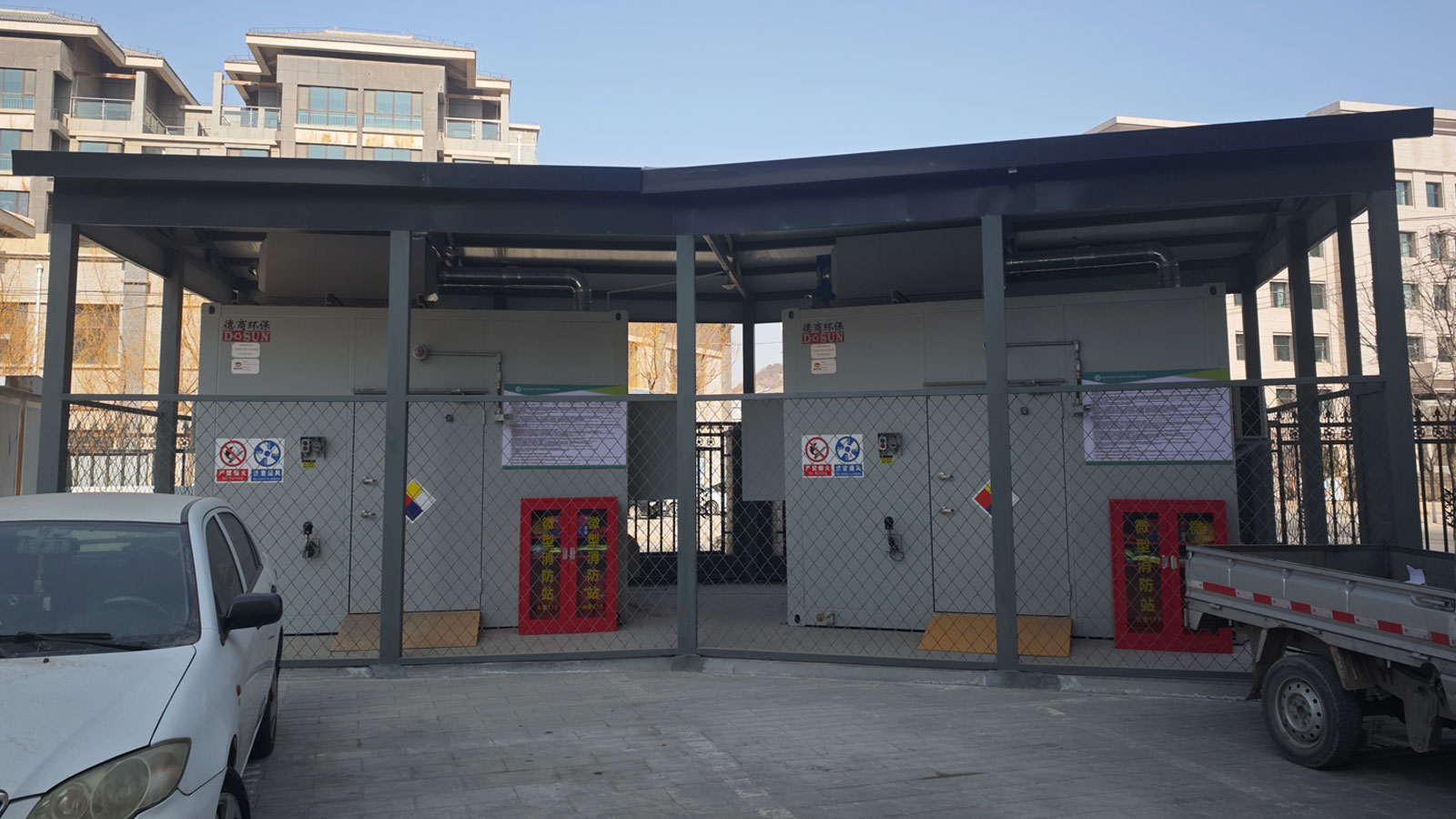
Back to the Hospital: What Difference Do Two Sets of Outdoor Cabinets Make?
The two sets of outdoor hazardous chemical storage cabinets designed by DeSUN ECOTECH for the hospital do not start with building a new warehouse. Instead, they consolidate hazardous chemicals scattered across various departments into two controllable outdoor storage nodes.
The two cabinets are configured with zoned storage based on the hazard properties of the materials. Flammable liquids and corrosive substances are placed in separate zones, physically eliminating the possibility of acids, alkalis and oxidizing agents being stored adjacent to each other.
Integrating explosion-proof electrical systems, forced ventilation, leakage collection and sensor-based monitoring, the cabinets condense the core safety logic of a full hazardous chemical warehouse into a deployable cabinet-sized unit. The outdoor deployment bypasses the hard constraint of insufficient fire separation distance between hospital buildings, without requiring modifications to existing building structures.
For hospital management, the improvement goes beyond simply having a place to store chemicals. Centralized storage enables clear and accurate ledgers; zoned configuration allows precise tracking of material requisition and return by category; real-time monitoring data transforms safety management from experience-driven to record-based. The standardization of hazardous chemical management in hospitals often starts with putting scattered bottles and containers into the first compliant storage cabinet.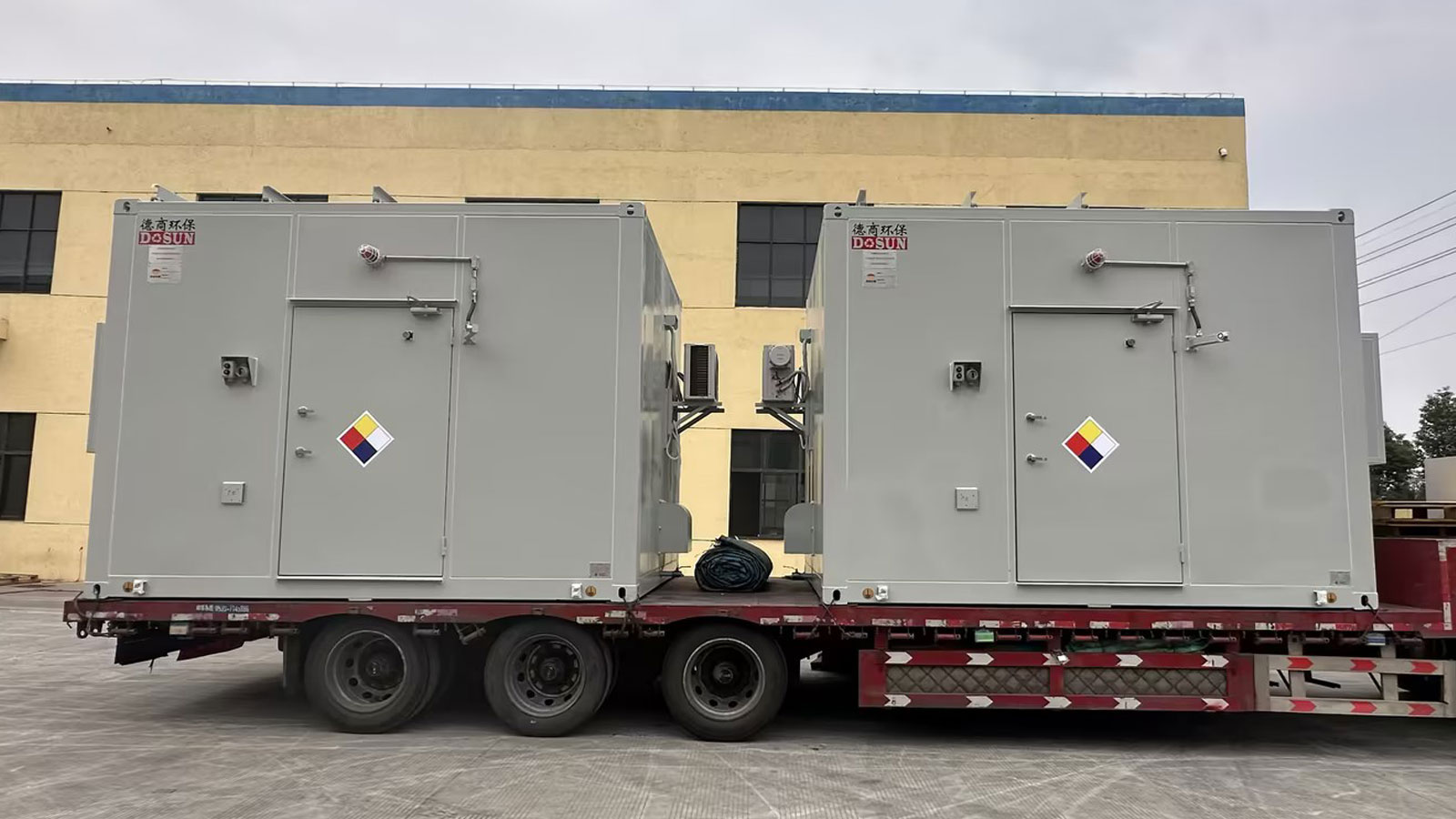
Conclusion
The small-batch, multi-variety nature of hospital hazardous chemicals should not be an excuse for extensive management. Precisely because of the small volume and diverse categories, a physical carrier that delivers classified storage, isolation, monitoring and compliant storage in one go is all the more necessary. The implementation of two sets of outdoor cabinets solves not just the site shortage problem, but the management deadlock of "decentralization leads to loss of control".
 New
- 1 The Dilemma of Small-Batch, Multi-Variety Hazardous Chemicals in Hospitals: Two Sets of Outdoor Hazardous Chemical Cabinets Unlock the Compliance Deadlock 2026-11-04
- 2 Multi-scenario Storage for Finished, Waste and Test-Pending Batteries: How Intelligent Specialized Cabinets Balance Safety, Compliance and Environmental Protection 2026-10-28
- 3 How to Select Outdoor Hazardous Chemical Storage Cabinets? Five Key Dimensions to Avoid Fatal Selection Pitfalls 2026-10-21
- 4 Intelligent Cloud-Based Hazardous Waste Warehouse Put into Operation at Lu'an Oil Depot of Anhui Petroleum: A New Compliant Temporary Storage Option for the Petroleum and Petrochemical Industry 2026-10-14
- 5 How to Implement the "Six Musts" for Hazardous Chemicals in Industrial and Commercial Enterprises? DeSUN ECOTECH Storage Cabinets Deliver the Answer 2026-09-23
 Hot
- 1 Intelligent Environmental Protection: What Makes a Good Hazardous Waste Temporary Storage Cabinet? DeSUN ECOTECH Provides the Answer 2026-04-15
- 2 Hazardous Waste and General Solid Waste: Comprehensive Analysis of Identification Standards, Treatment Methods and DeSUN ECOTECH Solutions 2026-04-09
- 3 DeSUN ECOTECH Flammable Liquid Safety Storage Cabinet Passes SGS 90-Minute Fire Test and Earns Type 90 Certification 2026-08-19
- 4 DeSUN ECOTECH Intelligent Battery Storage Cabinets Enter German Market; One-Stop Delivery Reinforces Battery Safety Defense 2026-09-09
- 5 Hazardous Chemicals and Hazardous Waste Temporary Storage Cabinets: How to Choose the Right "Safety Steward"? A Comprehensive Guide to Differences and Selection 2026-04-22



- About Us Company Profile Corporate Culture Corporate Awards
- Solutions Hazardous Waste Storage Solutions Hazardous Chemical Storage Solutions Gas Cylinder Storage Solutions Battery Storage, Transfer, and Charging Solutions Intelligent Transfer Solutions
- Products Hazardous Waste Storage Cabinets Hazardous Chemical Storage Cabinets Intelligent Gas Cylinder Storage Cabinets Intelligent Battery Storage Cabinets Intelligent Transfer Containers More Products
-
Customer Cases
By Product
Category - News Corporate News Industry News
- Contact Us Contact Us
 沪公网安备31011402021669号
-
 Online Message


- Online Message