

 CN
CN


Against the backdrop of stricter environmental supervision and a more robust safety production responsibility system, building a compliant, safe, and efficient hazardous waste temporary storage room for enterprises has become a must for factory managers and environmental principals. However, faced with uneven manufacturers in the market, how can you identify reliable partners from seemingly attractive promotions? How to judge whether a manufacturer’s products can pass environmental inspections and stand the test of time? This article systematically sorts out the core criteria for evaluating hazardous waste temporary storage room manufacturers, and provides a practical reference framework based on the practices of Shanghai DeSUN ECOTECH Technology Co., Ltd., a national high-tech enterprise.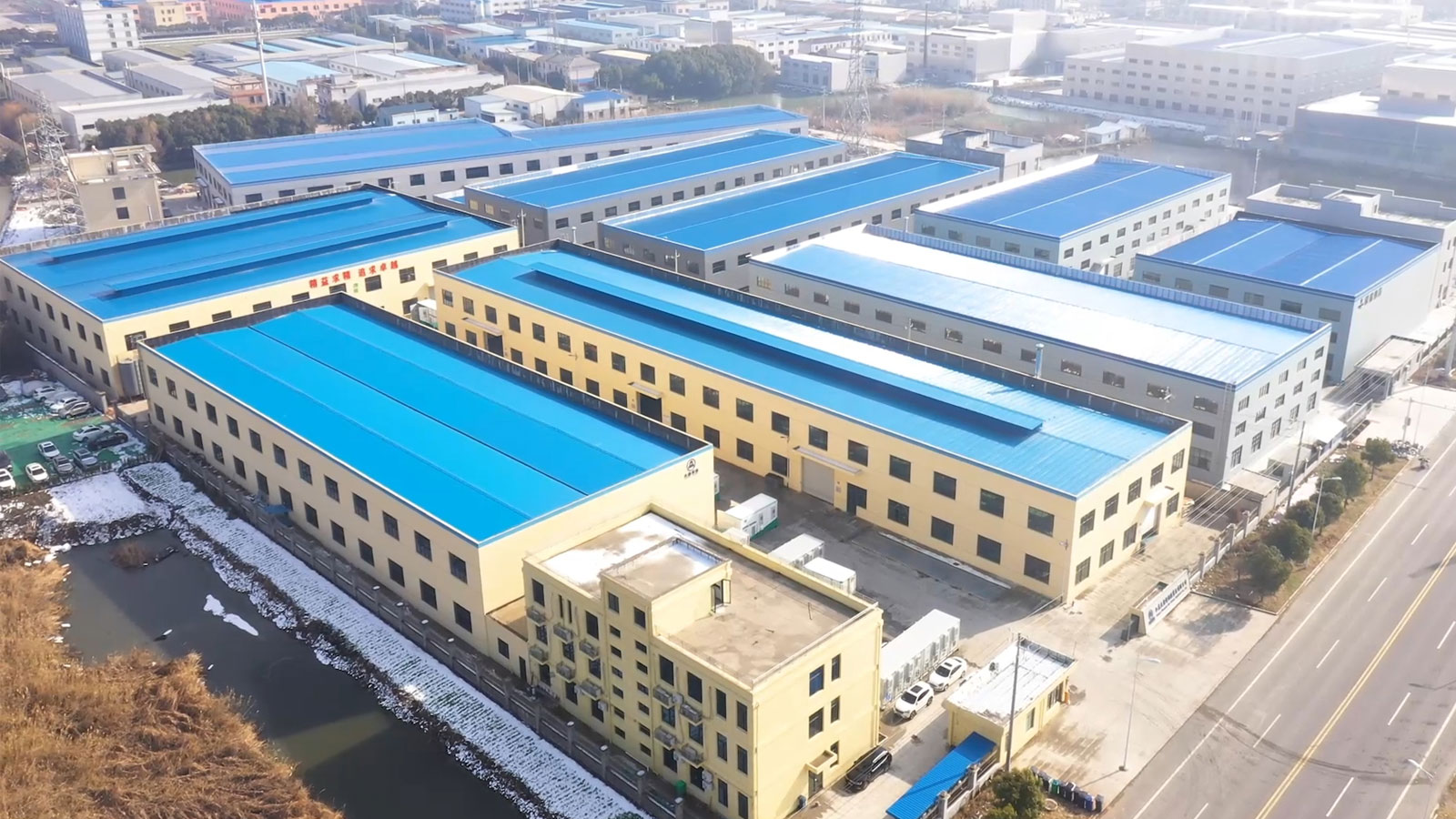
I. Compliance Is the First Hurdle: Products Must Meet National Standards
Regardless of manufacturers’ promotions, the first threshold for judging quality is whether product design fully complies with mandatory national standards. The current core standard is the Standard for Pollution Control on Hazardous Waste Storage (GB 18597-2023), implemented on July 1, 2023, which specifies detailed requirements for site selection, design, anti-seepage, wind protection, sun protection, and monitoring of storage facilities.
Evaluation Points: A professional manufacturer must clearly explain in its proposal how to meet core indicators such as anti-seepage (permeability coefficient ≤ 10⁻¹⁰ cm/s), anti-corrosion, fire prevention, leakage collection, and ventilation purification. Manufacturers unable to answer questions about GB 18597-2023 should be eliminated directly.
Take Shanghai DeSUN ECOTECH as an example: its products achieve a permeability coefficient of ≤ 1.6×10⁻¹¹ cm/s, one order of magnitude better than the national standard. The cabinet adopts a 3 mm double-layer anti-corrosion steel plate structure, with a dry film thickness of ≥ 120 μm for the upper protective layer and ≥ 200 μm for the lower layer, meeting strict anti-seepage and anti-corrosion requirements. Its products also comply with multiple standards including General Requirements for Equipment for Explosive Atmospheres (GB 3836) and Code for Fire Protection Design of Buildings (GB 50016).
II. Technical Strength Depends on Hard Indicators: Materials, Craftsmanship, and Design Capability
Compliance is only the bottom line; the upper limit of quality and service life of a hazardous waste temporary storage room is determined by the manufacturer’s R&D and manufacturing capabilities. Focus on three aspects during evaluation:
1.Material investment: Require third-party test reports for key materials, including HDPE anti-seepage membrane thickness (≥ 2 mm), anti-corrosion coating adhesion, acid-alkali resistance, and fire-resistant panel performance. This distinguishes formal manufacturers from simple fabricators.
2.Craftsmanship details: Top manufacturers use double-weld welding and inflation testing for anti-seepage membrane splicing, provide RT/UT flaw detection reports for steel structure welds, and set up independent non-conforming product isolation areas. These details ensure long-term operation in harsh acidic/alkaline environments.
3.Customized design capability: Since each enterprise has different waste types, forms, quantities, and site conditions, one-size-fits-all solutions fail to meet actual needs. DeSUN ECOTECH configures different protection levels and functional zones based on material characteristics (corrosivity, flammability, toxicity) for chemical, pharmaceutical, university, and other scenarios.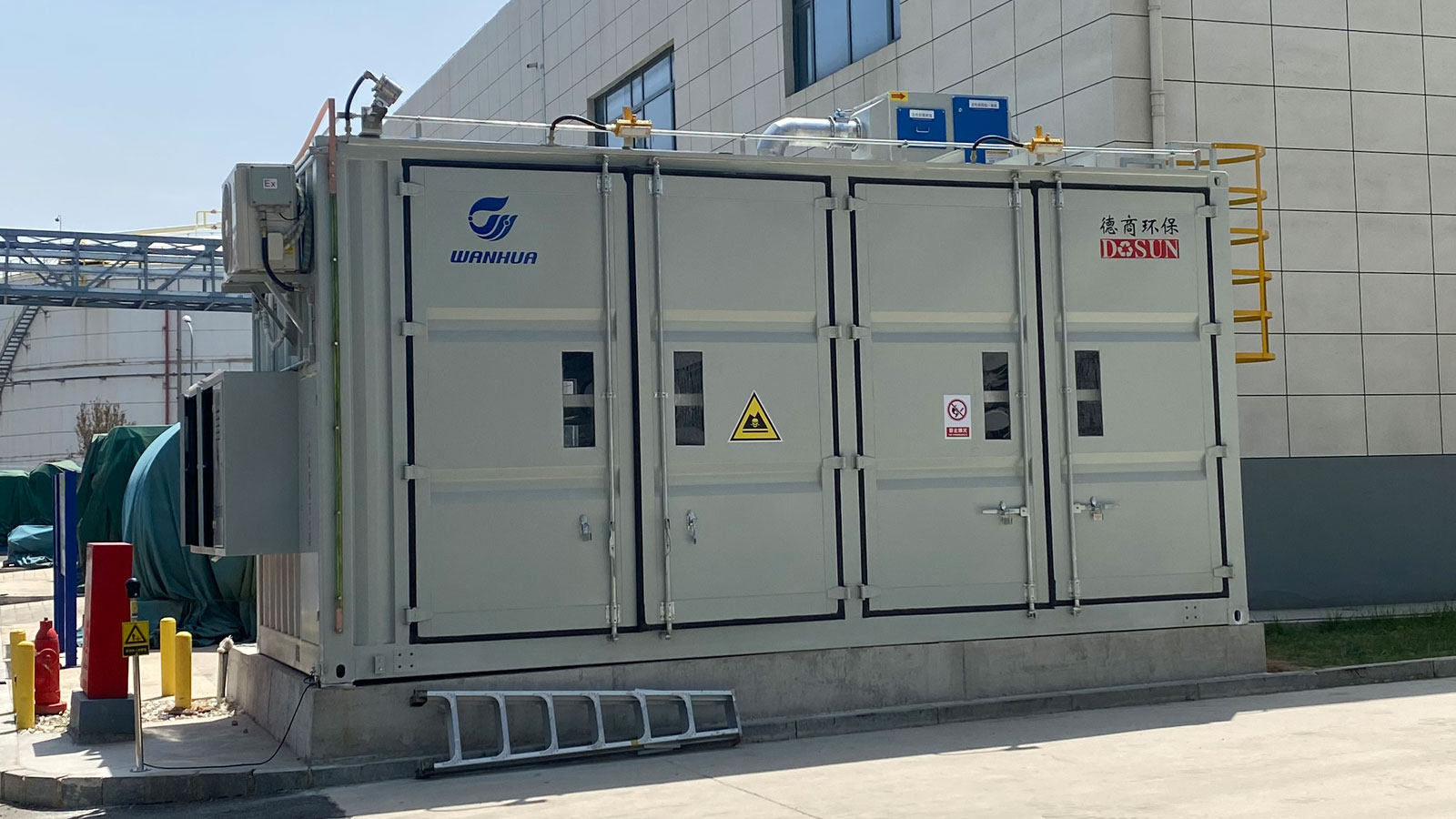
III. Case Verification: Good Products Speak for Themselves
No matter how detailed the technical proposal is, only on-the-ground implementation proves strength. When evaluating manufacturers, verify successful delivery cases in the same industry and for the same type of hazardous waste.
Convincing cases meet two conditions: (1) the client and industry are representative; (2) the equipment has operated stably for a period (not just delivered). For example, multiple sets of intelligent hazardous waste temporary storage cabinets supplied by DeSUN ECOTECH to Wanhua Chemical (Ningbo) have been in stable operation since January 2022. As a global chemical leader, Wanhua’s selection and usage serve as strong quality endorsement.
Note: Many weak manufacturers cannot provide site-visitable cases or only show small unknown enterprise projects. Checking winning bids in public tendering markets is also an effective way to gauge market recognition. Notably, DeSUN ECOTECH recently won bids including:
•Hazardous Chemicals Storage Cabinets for AVIC Chengdu Aircraft Industry Group (bid amount: ¥1.16 million)
•Hazardous Waste Temporary Storage Depot for Longyuan Power Liaoning Company (bid price: ~¥1.2785 million)
These large state-owned enterprise procurement projects indirectly confirm DeSUN ECOTECH’s brand reputation in the industry.
IV. Intelligent Level: Invest in Current Equipment, Plan for Future Management
The Ministry of Ecology and Environment has explicitly promoted full-process information supervision of hazardous waste, meaning temporary storage rooms are transforming from physical storage spaces to data management nodes. The key to judging future-oriented manufacturers is intelligent integration capability.
Intelligence lies in three layers:
•Sensing layer: Integrated sensors for temperature, humidity, VOC, smoke, flame, etc.
•Transmission layer: 4G/5G IoT for real-time data transmission
•Application layer: Automatic alarm, electronic ledger generation, remote monitoring
DeSUN ECOTECH excels in this dimension: its intelligent storage cabinets integrate 12 types of environmental sensors, 4G/5G modules, and an AI algorithm platform, realizing real-time monitoring with precision of ±0.5 °C / ±0.1 ppm and AI fault prediction accuracy over 95%. It supports code-scan information entry and automatic electronic ledger generation, reducing manual intervention by 80%, and sustains 72 hours of monitoring after power failure.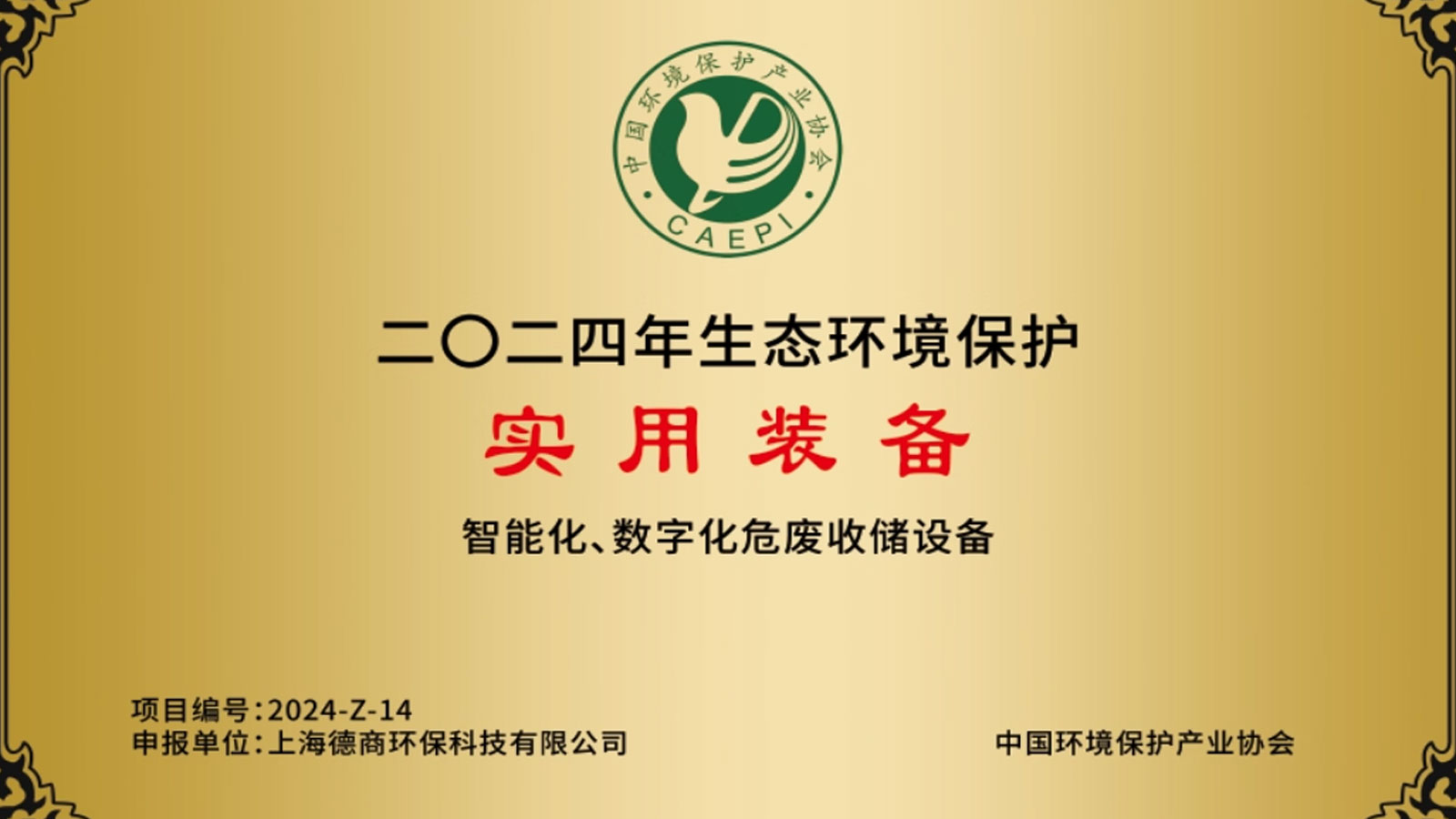
V. Full-Life-Cycle Service: From Turnkey Delivery to Long-Term Support
The value of a hazardous waste temporary storage room lies not only in quality construction but also in reliable, long-term use. The final evaluation step is after-sales capability.
Focus on confirming: warranty period (industry standard: 1–3 years), fault response time (24-hour on-site commitment), and complete spare parts supply chain. Many manufacturers become unresponsive after delivery, leaving users helpless during emergencies.
VI. Practical Case: Shanghai DeSUN ECOTECH’s Performance Across Dimensions
Based on the above framework, DeSUN ECOTECH demonstrates industry benchmark traits across key dimensions. Founded in 2018, it is a national high-tech enterprise. In 2019, it cooperated with Germany’s BAUER Group, introduced advanced German structural design, and conducted independent innovation adapted to local scenarios. Its product portfolio forms a full-line solution covering hazardous waste collection and storage: standardized turnover containers, intelligent temporary storage cabinets, and intelligent three-dimensional warehouses.
Notably, DeSUN ECOTECH’s intelligent and digital hazardous waste collection and storage equipment was recommended as a practical ecological environmental protection equipment by the China Association of Environmental Protection Industry (2024-Z-14). Its intelligent hazardous chemicals and hazardous waste temporary storage cabinet technology was selected as Applicable Technology for Green Chemical Industrial Parks 2024–2025, ranking among the top 20 after rigorous screening from 57 applications.
Compared with traditional civil warehouses, DeSUN ECOTECH’s intelligent storage cabinets shorten construction , reduce operation and maintenance.These data show that top manufacturers not only supply products but also drive the industry’s paradigm shift from passive compliance to active intelligent management.
When choosing a hazardous waste temporary storage room manufacturer, enterprises can follow the five-step evaluation method: compliance as the foundation → technology as the core → cases as proof → intelligence as the engine → service as support, and make prudent, rational decisions based on their waste types, site conditions, and budget.
 New
New
- 1 How to Select Outdoor Hazardous Chemical Storage Cabinets? Five Key Dimensions to Avoid Fatal Selection Pitfalls 2026-10-21
- 2 Intelligent Cloud-Based Hazardous Waste Warehouse Put into Operation at Lu'an Oil Depot of Anhui Petroleum: A New Compliant Temporary Storage Option for the Petroleum and Petrochemical Industry 2026-10-14
- 3 How to Implement the "Six Musts" for Hazardous Chemicals in Industrial and Commercial Enterprises? DeSUN ECOTECH Storage Cabinets Deliver the Answer 2026-09-23
- 4 Choosing the Right Hazardous Waste Temporary Storage Cabinet Is Only the First Step; Poor Daily Management Still Fails Environmental Protection Inspections 2026-09-16
- 5 DeSUN ECOTECH Intelligent Battery Storage Cabinets Enter German Market; One-Stop Delivery Reinforces Battery Safety Defense 2026-09-09
 Hot
Hot
- 1 Intelligent Environmental Protection: What Makes a Good Hazardous Waste Temporary Storage Cabinet? DeSUN ECOTECH Provides the Answer 2026-04-15
- 2 Hazardous Waste and General Solid Waste: Comprehensive Analysis of Identification Standards, Treatment Methods and DeSUN ECOTECH Solutions 2026-04-09
- 3 DeSUN ECOTECH Flammable Liquid Safety Storage Cabinet Passes SGS 90-Minute Fire Test and Earns Type 90 Certification 2026-08-19
- 4 Hazardous Chemicals and Hazardous Waste Temporary Storage Cabinets: How to Choose the Right "Safety Steward"? A Comprehensive Guide to Differences and Selection 2026-04-22
- 5 Shanghai DeSUN ECOTECH CO., Ltd – Selected as a 2025 Shanghai "Specialized, Refined, Differential and Innovative (SRDI)" Small and Medium-sized Enterprise 2025-09-04



- About Us Company Profile Corporate Culture Corporate Awards
- Solutions Hazardous Waste Storage Solutions Hazardous Chemical Storage Solutions Gas Cylinder Storage Solutions Battery Storage, Transfer, and Charging Solutions Intelligent Transfer Solutions
- Products Hazardous Waste Storage Cabinets Hazardous Chemical Storage Cabinets Intelligent Gas Cylinder Storage Cabinets Intelligent Battery Storage Cabinets Intelligent Transfer Containers More Products
-
Customer Cases
By Product
Category - News Corporate News Industry News
- Contact Us Contact Us
 沪公网安备31011402021669号
-
 Online Message


- Online Message