

 CN
CN


On May 4, 2026, a particularly serious explosion occurred at Hunan Liuyang Huasheng Fireworks Manufacturing & Display Co., Ltd., causing heavy casualties. The State Council immediately established an accident investigation team, and the Supreme People’s Procuratorate placed the case on its key supervision list.
This is not an isolated case. Investigations revealed that the enterprise involved had been found to have potential safety hazards by regulators for many consecutive years. Since 2021, it had received more than 20 law enforcement inspections, most of which concluded that “hidden dangers existed”. Just months before the accident, regulators had discovered the enterprise’s violation of mixing oxidants and reducing agents for storage, packaging, and weighing.
Intrinsic Hazards of Raw Materials
From a technical perspective, the safety risks in fireworks production are rooted in the hazardous properties of their raw materials. Fireworks propellants typically consist of oxidizers, combustibles, binders, and various additives. Common oxidizers include nitrates, chlorates, perchlorates, etc., while combustibles include aluminum powder, magnesium-aluminum alloy powder, sulfur, and others.
These substances are classified as hazardous chemicals. Once mixed, they are highly sensitive to heat, flame, static electricity, and mechanical friction, and can easily ignite or explode under external energy. If oxidizers come into contact with reducing agents during storage, a highly dangerous system is formed that can be ignited at any time.
Overlooked Risks of Waste Materials
A large amount of hazardous waste is also generated during production. According to the National Catalogue of Hazardous Wastes, waste from the fireworks manufacturing industry falls under the category of HW15 Explosive Waste. It mainly includes semi-finished products containing gunpowder, hazardous residues in sedimentation tanks and drainage ditches, discarded pyrotechnic compositions, and fuse cords.
Such waste is also flammable and explosive. Improper temporary storage, mixed placement with chemical raw materials, or random piling constitutes a major safety hazard—its danger is no less than that of raw materials.
Legal Safety Red Lines
For this reason, strict technical standards govern the storage and temporary keeping of both hazardous chemical raw materials and generated hazardous waste. The Law on the Safety of Hazardous Chemicals clearly stipulates that hazardous chemical entities must meet the safety conditions required by national standards.
Relevant codes require hazardous chemicals to be stored in separate zones, categories, and warehouses according to their properties; incompatible substances must not be mixed—this is the key requirement violated by Huasheng Fireworks Factory. For hazardous waste storage, the Standard for Pollution Control on Hazardous Waste Storage (GB 18597-2023) sets systematic requirements for anti-seepage, rain protection, leakage containment, gas purification, and classified collection.
The standard specifies that hazardous waste that is explosive or flammable under normal temperature and pressure must be pretreated for stabilization before storage; otherwise, it shall be stored as explosive or flammable dangerous goods. The core principle of these provisions is clear: effective isolation is mandatory.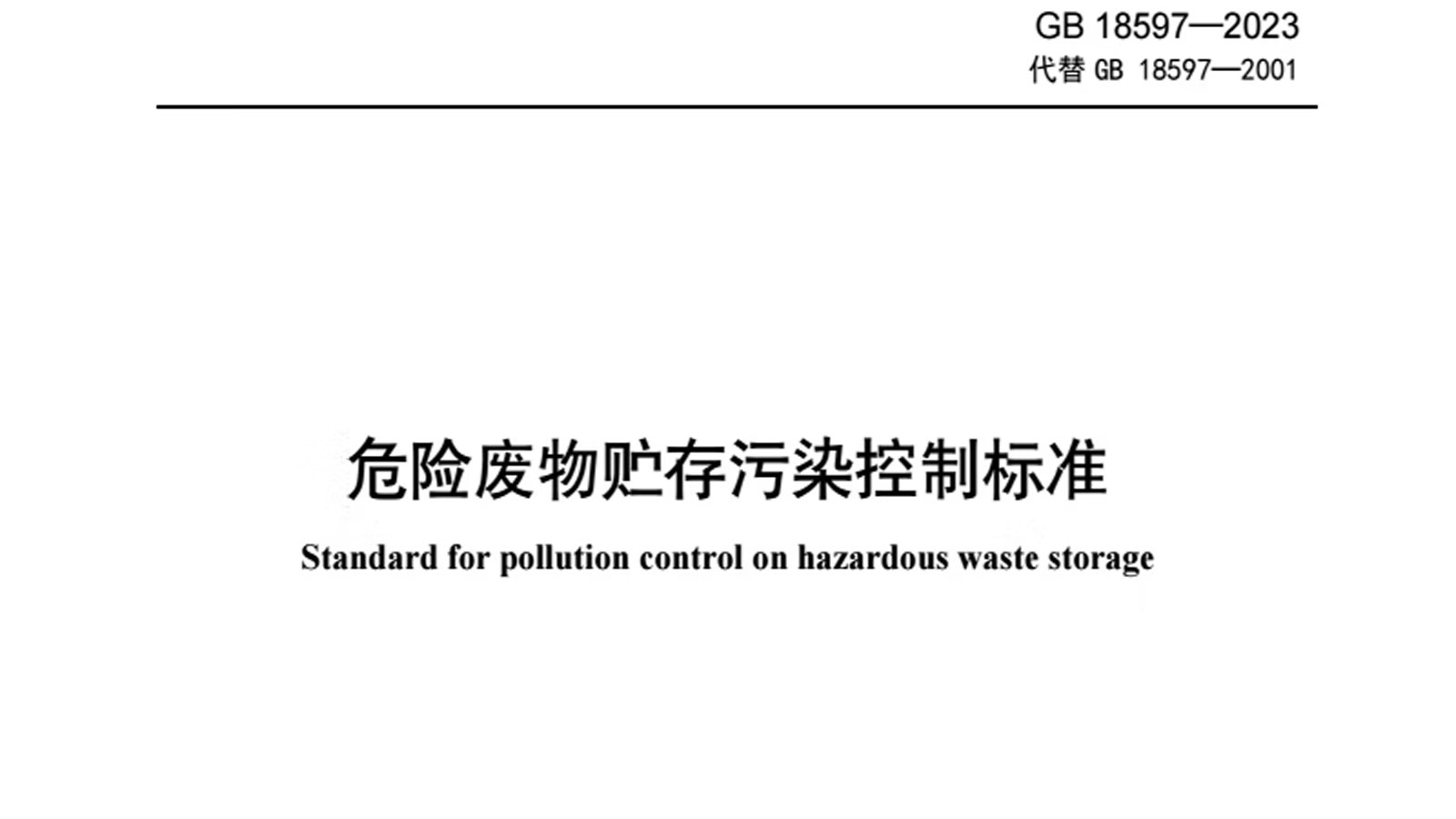
Specialized Solutions for Practical Difficulties
However, in actual production, some enterprises struggle to build large-scale dedicated warehouses due to cost or space constraints. Against this background, professional and standardized storage equipment has become an efficient and reliable solution.
Specialized cabinets for hazardous chemicals, hazardous waste, and integrated storage for both types of materials are increasingly becoming critical facilities to remedy enterprises’ storage shortcomings.
Functional Positioning of the Three Types of Specialized Cabinets
- Hazardous Chemicals Storage Cabinets are designed for the safe storage of flammable, explosive, and corrosive hazardous chemicals. Qualified explosion-proof cabinets effectively protect chemicals inside under extreme conditions, block external ignition sources, and achieve zoned isolation of incompatible substances such as oxidizers and reducing agents.
- Hazardous Waste Storage Cabinets focus on meeting requirements for hazardous waste including anti-seepage, leak prevention, corrosion resistance, rain protection, and ventilation purification. They ensure that gunpowder-containing waste, sediment residues, etc., do not leak or spread during temporary storage, nor cause secondary hazards due to environmental factors.
- Integrated Storage Cabinets for Hazardous Chemicals and Hazardous Waste combine both functions. Through scientific internal partition design, they realize classified and isolated storage of chemical raw materials and hazardous waste in a single unit, making them especially suitable for small and medium-sized enterprises with limited space. Such equipment is supported by corresponding group standards.
Confining Risks in Standardized “Cabinets”
Lessons from the Liuyang accident show that mixed storage of oxidizers and reducing agents was one direct hazard. The risk of accidents would have been greatly reduced if the enterprise had installed fully functional hazardous chemicals storage cabinets to effectively isolate incompatible chemicals, and used standardized hazardous waste temporary storage cabinets for the safe keeping of gunpowder-containing waste.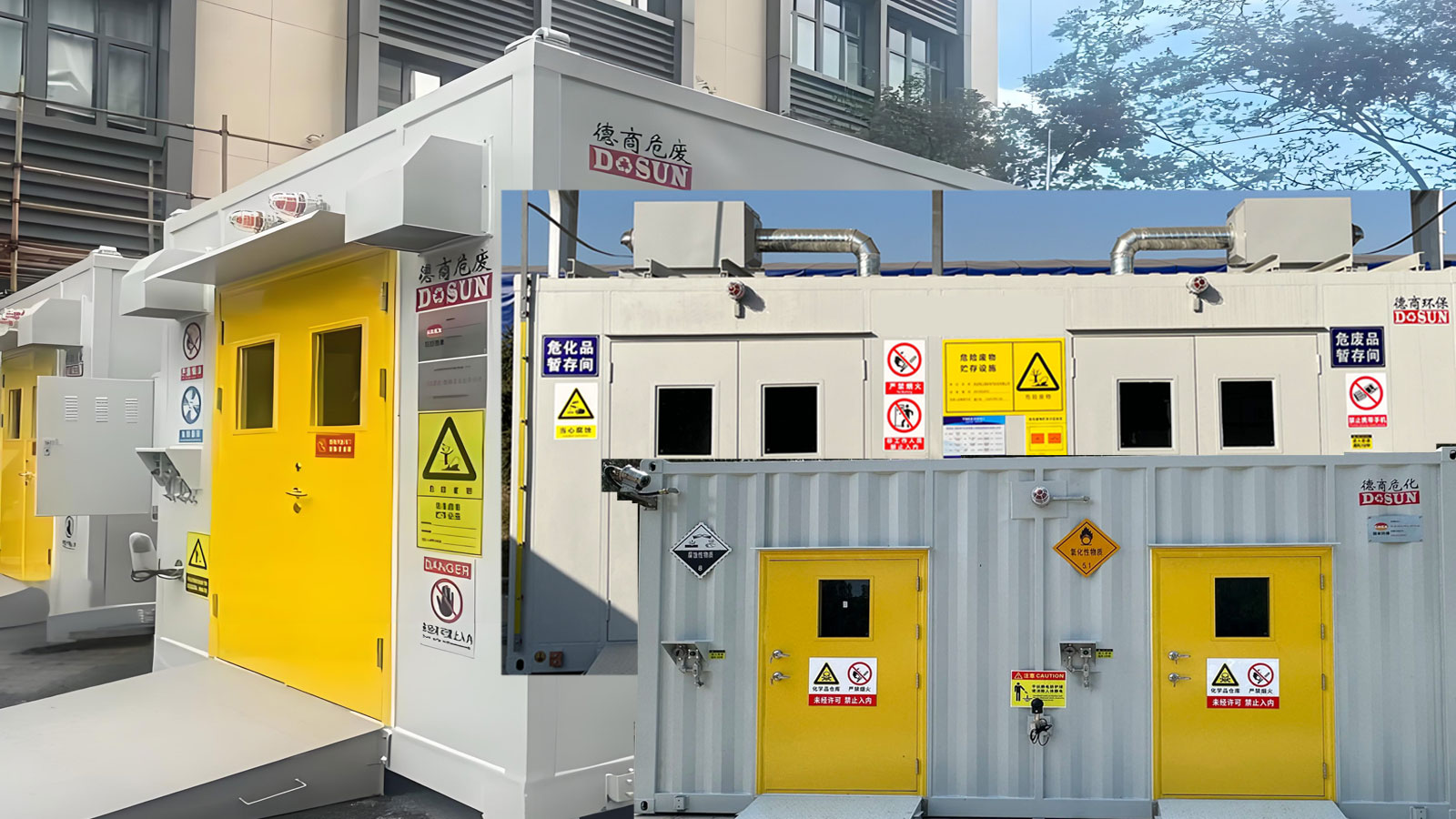
Accident investigations are still ongoing, but safety improvements cannot wait. Specialized storage cabinets are not panaceas, yet they are an indispensable line of defense in the storage link. For enterprises handling hazardous chemicals, integrating standardized storage equipment into safety management systems—paired with strict protocols and personnel training—can truly confine risks in “cabinets”.
 New
New
- 1 How to Select Outdoor Hazardous Chemical Storage Cabinets? Five Key Dimensions to Avoid Fatal Selection Pitfalls 2026-10-21
- 2 Intelligent Cloud-Based Hazardous Waste Warehouse Put into Operation at Lu'an Oil Depot of Anhui Petroleum: A New Compliant Temporary Storage Option for the Petroleum and Petrochemical Industry 2026-10-14
- 3 How to Implement the "Six Musts" for Hazardous Chemicals in Industrial and Commercial Enterprises? DeSUN ECOTECH Storage Cabinets Deliver the Answer 2026-09-23
- 4 Choosing the Right Hazardous Waste Temporary Storage Cabinet Is Only the First Step; Poor Daily Management Still Fails Environmental Protection Inspections 2026-09-16
- 5 DeSUN ECOTECH Intelligent Battery Storage Cabinets Enter German Market; One-Stop Delivery Reinforces Battery Safety Defense 2026-09-09
 Hot
Hot
- 1 Intelligent Environmental Protection: What Makes a Good Hazardous Waste Temporary Storage Cabinet? DeSUN ECOTECH Provides the Answer 2026-04-15
- 2 Hazardous Waste and General Solid Waste: Comprehensive Analysis of Identification Standards, Treatment Methods and DeSUN ECOTECH Solutions 2026-04-09
- 3 DeSUN ECOTECH Flammable Liquid Safety Storage Cabinet Passes SGS 90-Minute Fire Test and Earns Type 90 Certification 2026-08-19
- 4 Hazardous Chemicals and Hazardous Waste Temporary Storage Cabinets: How to Choose the Right "Safety Steward"? A Comprehensive Guide to Differences and Selection 2026-04-22
- 5 Shanghai DeSUN ECOTECH CO., Ltd – Selected as a 2025 Shanghai "Specialized, Refined, Differential and Innovative (SRDI)" Small and Medium-sized Enterprise 2025-09-04



- About Us Company Profile Corporate Culture Corporate Awards
- Solutions Hazardous Waste Storage Solutions Hazardous Chemical Storage Solutions Gas Cylinder Storage Solutions Battery Storage, Transfer, and Charging Solutions Intelligent Transfer Solutions
- Products Hazardous Waste Storage Cabinets Hazardous Chemical Storage Cabinets Intelligent Gas Cylinder Storage Cabinets Intelligent Battery Storage Cabinets Intelligent Transfer Containers More Products
-
Customer Cases
By Product
Category - News Corporate News Industry News
- Contact Us Contact Us
 沪公网安备31011402021669号
-
 Online Message


- Online Message