

 CN
CN


In the corners of factory workshops or the edges of industrial parks, there often lurk a group of hot-tempered "troublemakers" — hazardous waste.
They may be waste barrels soaked in chemical reagents, waste residues containing heavy metals, or corrosive waste liquids. Random stacking can easily trigger risks such as leakage, fire, and pollution.
The hazardous waste temporary storage room is precisely the dedicated "safety steward" that tames these "troublemakers". It is not a simple "storage room", but a key link running through environmental compliance, safety protection, and disposal connection, whose role is far more important than imagined.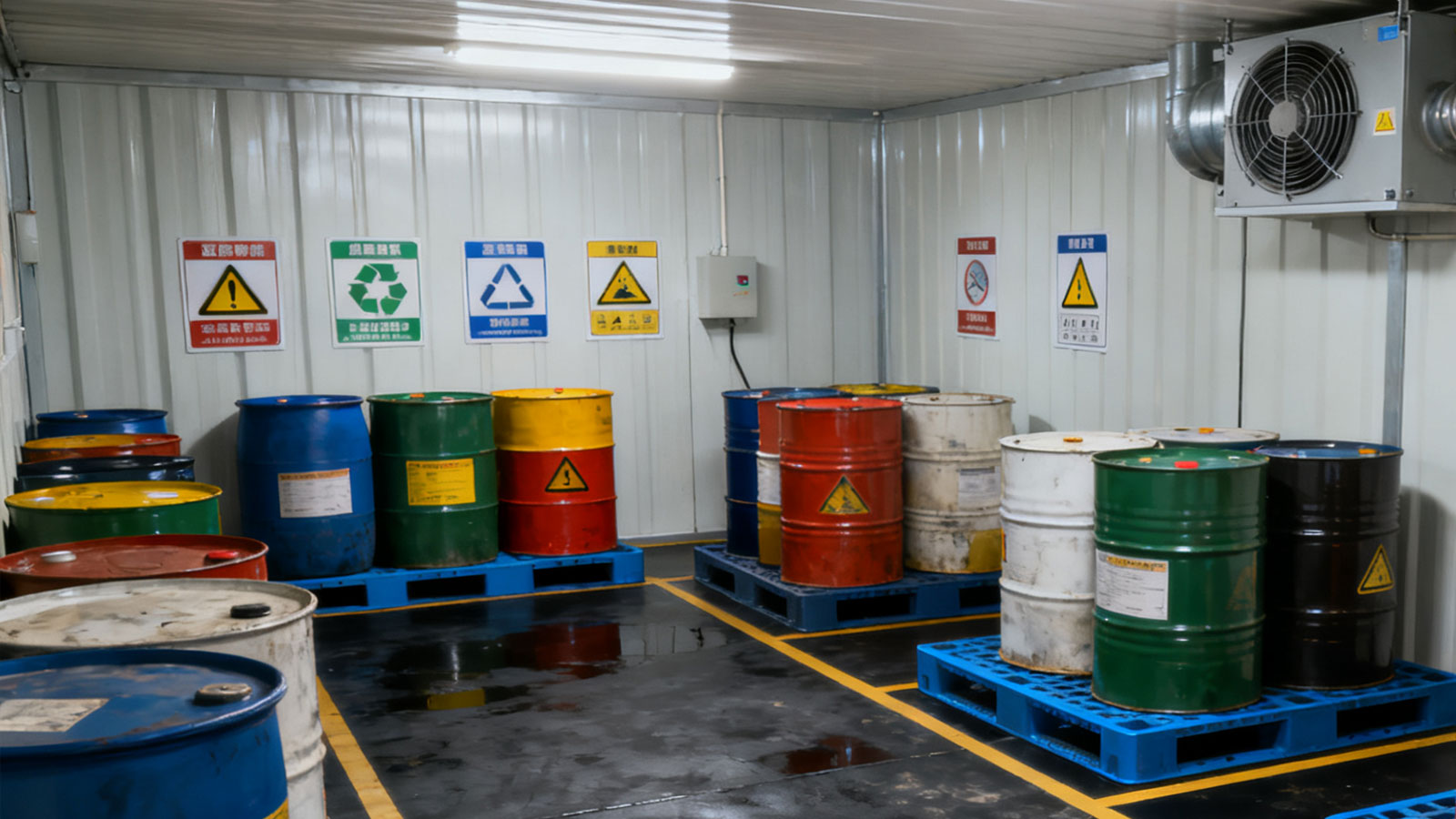
First Magic: Physical Isolation to Block the Pollution Chain
Most hazardous wastes are corrosive, toxic, flammable, or explosive. Once they come into contact with soil or groundwater, they can cause long-term pollution.
Professional temporary storage rooms are equipped with anti-seepage layers, anti-leakage trays, and cofferdams — like putting "protective clothing" on hazardous waste to prevent liquid leakage. They also have ventilation systems and explosion-proof devices. For volatile, flammable, or explosive hazardous wastes, these facilities control indoor temperature, humidity, and gas concentration to avoid explosion or poisoning risks caused by the accumulation of volatile gases.
This design blocks the spread of hazardous waste to the surrounding environment from the source, holding the first line of defense in pollution prevention and control.
Second Magic: Classified Control to Eliminate Mixed Storage Risks
Different types of hazardous wastes are like incompatible "foes". For example, mixing acidic and alkaline waste liquids may cause neutralization reactions that produce toxic gases; storing cyanide-containing wastes with oxidants may trigger explosions.
In accordance with the "Standards for Pollution Control on the Storage of Hazardous Wastes", temporary storage rooms store hazardous wastes in separate areas by category. Clear hazard characteristic labels and warning signs are posted, clearly distinguishing "acidic areas", "alkaline areas", "flammable and explosive areas", etc. At the same time, irrelevant personnel are prohibited from entering, eliminating the risks of mixed storage and misuse through management, and ensuring each "troublemaker" stays in its own "designated seat".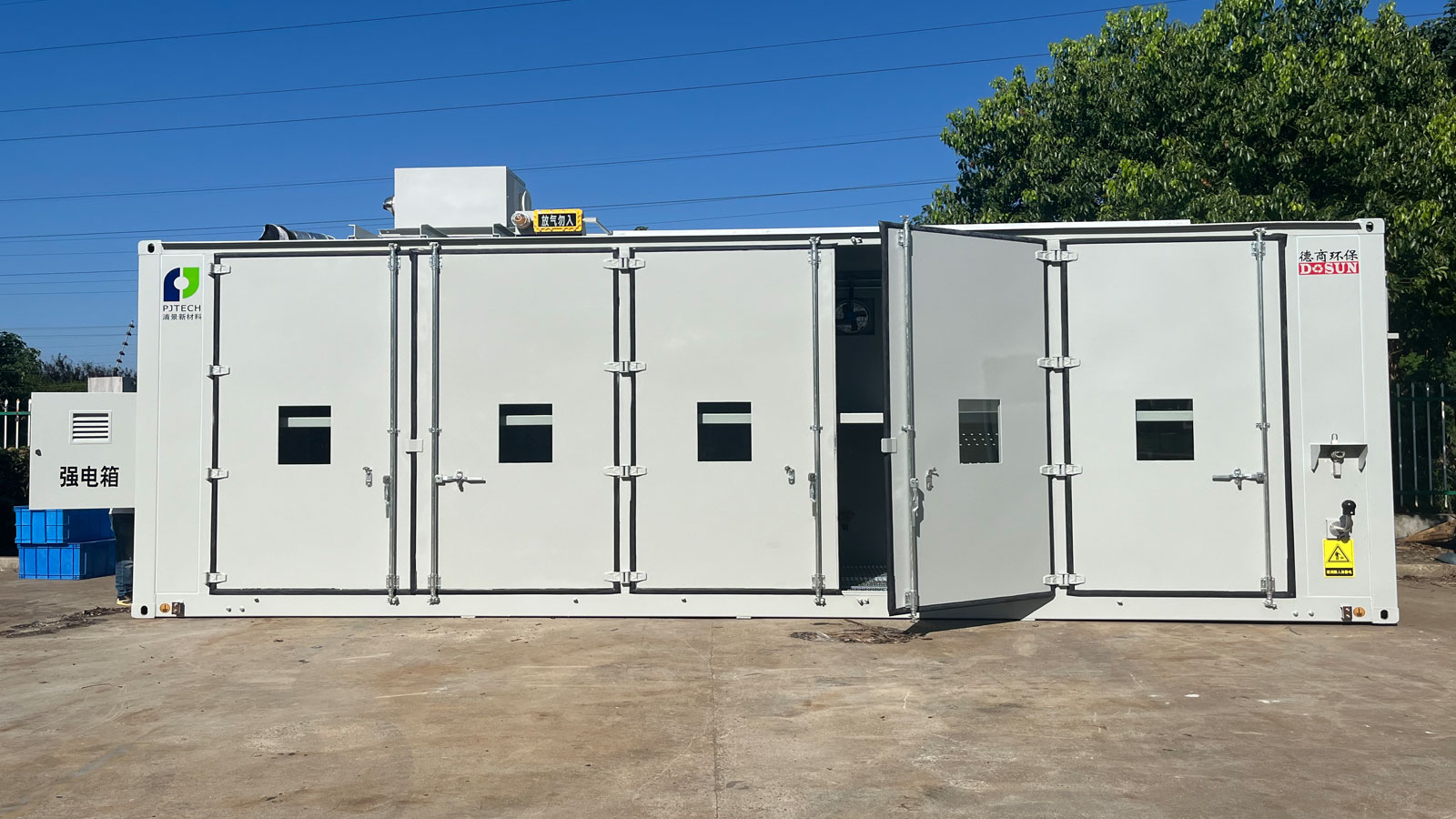
Third Magic: Account Book Traceability to Connect the Disposal Chain
Full-process traceability is the core requirement for hazardous waste disposal, and the temporary storage room is the starting point of the traceability system. Here, a detailed account book is established for each batch of hazardous waste, recording the production time, type, quantity, source, and destination — equivalent to issuing an "ID card" to each "troublemaker".
Standardized storage in the temporary storage room ensures that before hazardous waste is transferred to professional disposal units, its state is stable and quantity is accurate, avoiding loss, embezzlement, or illegal transfer.
Meanwhile, account book records are important evidence for enterprises to respond to environmental inspections, making the entire disposal process compliant and traceable, and preventing fines or production suspension due to irregular procedures.
Fourth Magic: Emergency Buffer to Resolve Disposal Time Gaps
The amount of hazardous waste generated by enterprises is volatile, while the collection, transportation, and disposal by professional units require advance booking and overall arrangement. There is inevitably a "time gap" between the two. The temporary storage room acts as a "buffer zone", temporarily storing hazardous waste to avoid backlogs at production sites due to delayed disposal.
Especially for small-scale enterprises with low hazardous waste output, the temporary storage room can centrally collect scattered hazardous waste and transfer it for unified disposal once a certain quantity is reached. This not only improves disposal efficiency but also reduces single disposal costs, solving the problem of "small amounts of hazardous waste having no one to collect or nowhere to go".
The seemingly insignificant hazardous waste temporary storage room is actually the invisible guardian of enterprise environmental safety.
It resists pollution risks through physical isolation, resolves mixed storage crises through classified control, ensures compliant circulation through account book traceability, and connects disposal links through emergency buffering. It makes the "gap period" of hazardous waste from generation to disposal safe and controllable.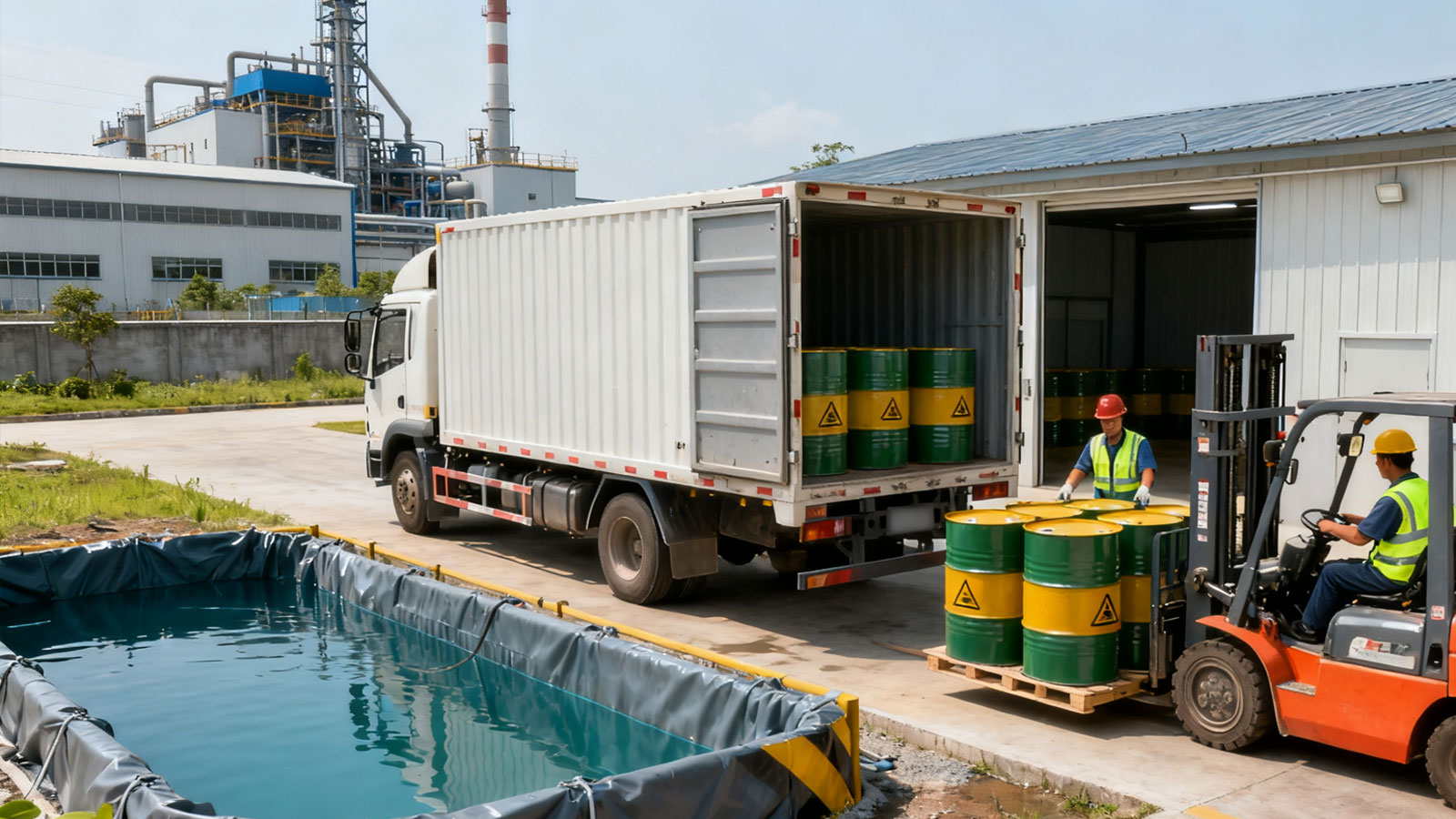
For enterprises, setting up standardized hazardous waste temporary storage rooms is not only a mandatory requirement for complying with environmental protection laws and regulations but also a concrete manifestation of upholding production safety bottom lines and fulfilling social responsibilities.
After all, only by taming the "troublemaker" of hazardous waste can production and operation be more assured and sustainable.
If you need to supplement specific industry cases of temporary storage rooms (such as chemical, electronic, medical, etc.), or refine the construction standards and management processes of temporary storage rooms, please feel free to inform me, and I can further enrich the content!
 New
New
- 1 Choosing the Right Hazardous Waste Temporary Storage Cabinet Is Only the First Step; Poor Daily Management Still Fails Environmental Protection Inspections 2026-09-16
- 2 DeSUN ECOTECH Intelligent Battery Storage Cabinets Enter German Market; One-Stop Delivery Reinforces Battery Safety Defense 2026-09-09
- 3 New Specifications for Gas Cylinder Storage: Analysis of Intelligent Explosion-Proof Solutions for Both Indoor and Outdoor Scenarios 2026-09-02
- 4 30 Sets of Customized Non-Standard Hazardous Waste Containers Exported to Kazakhstan: Why DeSUN ECOTECH Earns Trust? 2026-08-27
- 5 DeSUN ECOTECH Flammable Liquid Safety Storage Cabinet Passes SGS 90-Minute Fire Test and Earns Type 90 Certification 2026-08-19
 Hot
Hot
- 1 Intelligent Environmental Protection: What Makes a Good Hazardous Waste Temporary Storage Cabinet? DeSUN ECOTECH Provides the Answer 2026-04-15
- 2 Hazardous Waste and General Solid Waste: Comprehensive Analysis of Identification Standards, Treatment Methods and DeSUN ECOTECH Solutions 2026-04-09
- 3 Hazardous Chemicals and Hazardous Waste Temporary Storage Cabinets: How to Choose the Right "Safety Steward"? A Comprehensive Guide to Differences and Selection 2026-04-22
- 4 Safety Standards for Outdoor Gas Cylinder Cabinets: Multi-dimensional Environmental Protection to Build a Strong Defense Line for Outdoor Storage Safety 2026-02-26
- 5 Shanghai DeSUN ECOTECH CO., Ltd – Selected as a 2025 Shanghai "Specialized, Refined, Differential and Innovative (SRDI)" Small and Medium-sized Enterprise 2025-09-04



- About Us Company Profile Corporate Culture Corporate Awards
- Solutions Hazardous Waste Storage Solutions Hazardous Chemical Storage Solutions Gas Cylinder Storage Solutions Battery Storage, Transfer, and Charging Solutions Intelligent Transfer Solutions
- Products Hazardous Waste Storage Cabinets Hazardous Chemical Storage Cabinets Intelligent Gas Cylinder Storage Cabinets Intelligent Battery Storage Cabinets Intelligent Transfer Containers More Products
-
Customer Cases
By Product
Category - News Corporate News Industry News
- Contact Us Contact Us
 沪公网安备31011402021669号
-
 Online Message


- Online Message