

 CN
CN


I. Preface: The Core Premise of Hazardous Waste Temporary Storage Cabinet Protection
Hazardous waste temporary storage cabinets serve as the core safety barrier in the hazardous waste storage link, and their protection system is directly related to personnel safety, environmental safety and compliant operation. Most people know that they must have the three basic functions of explosion-proof, fire-proof and leakage-proof. However, in combination with national standards such as the Standard for Pollution Control on Hazardous Waste Storage (GB 18597-2023), a complete protection system needs to cover multiple dimensions, none of which can be omitted. The following are the core supplementary points, which take into account both practicality and compliance, to help enterprises avoid safety risks.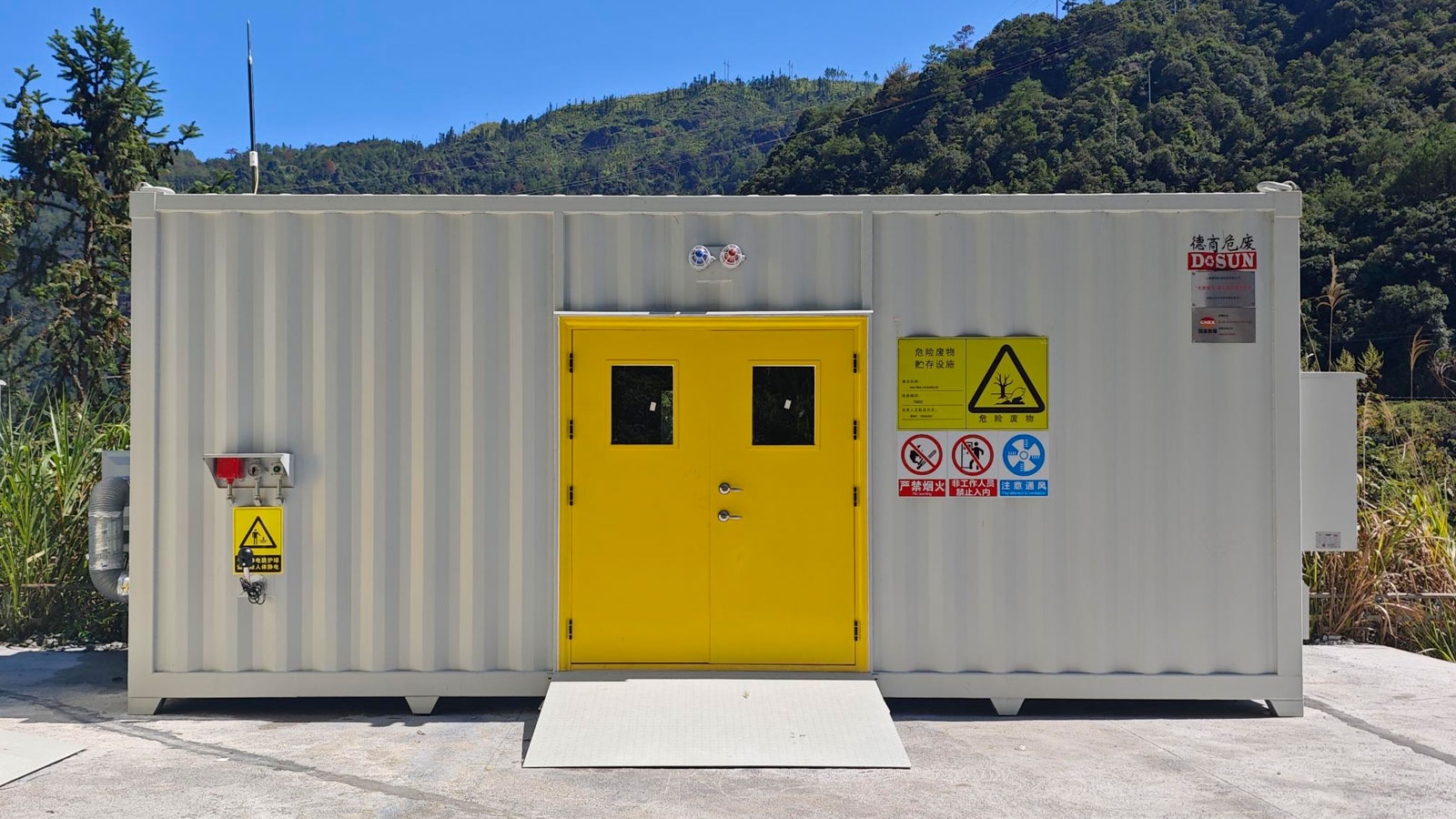
II. Core Protection Points of Hazardous Waste Temporary Storage Cabinets
1. Anti-seepage and Anti-corrosion: The Core Defense Line Against Pollution
Anti-seepage and anti-corrosion are key links that are easily overlooked and also the core of pollution prevention. The cabinet floor and the wall skirt above 1.2 meters shall be made of impermeable concrete, high-density polyethylene (HDPE) membrane and other materials to ensure that the permeability coefficient meets the standards. The foundation part shall also be additionally provided with anti-seepage layers such as clay layers for enhanced protection. At the same time, the contact surfaces of the cabinet body shall be treated with anti-corrosion treatment to match the properties of the stored hazardous waste. For the storage area of corrosive hazardous waste, epoxy anti-corrosion floors shall be laid, and leakage collection devices with up-to-standard volume shall be equipped to prevent the diffusion and pollution of leakage liquid.
2. Anti-static and Lightning Protection: Supporting Protection for Explosion Prevention
Anti-static and lightning protection need to work in synergy with the explosion-proof function to comprehensively avoid explosion hazards. The cabinet body shall be equipped with a special grounding device, and the grounding resistance shall be controlled within 10Ω to prevent static electricity accumulation from causing explosions; a human body static discharge device shall be installed at the entrance, and the ground shall be treated with anti-static treatment. In addition, the cabinet body and its ancillary facilities shall be covered with a complete lightning protection system, and all electrical equipment shall comply with the series standards of Electrical Apparatus for Explosive Atmospheres (GB 3836). Cabinets for flammable and explosive hazardous waste shall also be reserved with explosion vents.
3. Anti-poisoning and Anti-volatilization: Protecting Personnel Safety
Anti-poisoning and anti-volatilization are directly related to the safety of operators, and a full-process protection system needs to be constructed. The cabinet body shall have high air tightness with no gaps after closing to prevent the diffusion of toxic gases; at the same time, combustible and toxic gas concentration monitoring devices shall be installed to monitor in real time and trigger audible and visual alarms. It shall be matched with regularly replaced activated carbon adsorption devices and a "upper exhaust and lower make-up air" ventilation system to ensure that the air exchange rate meets the standards and effectively purify toxic volatile gases.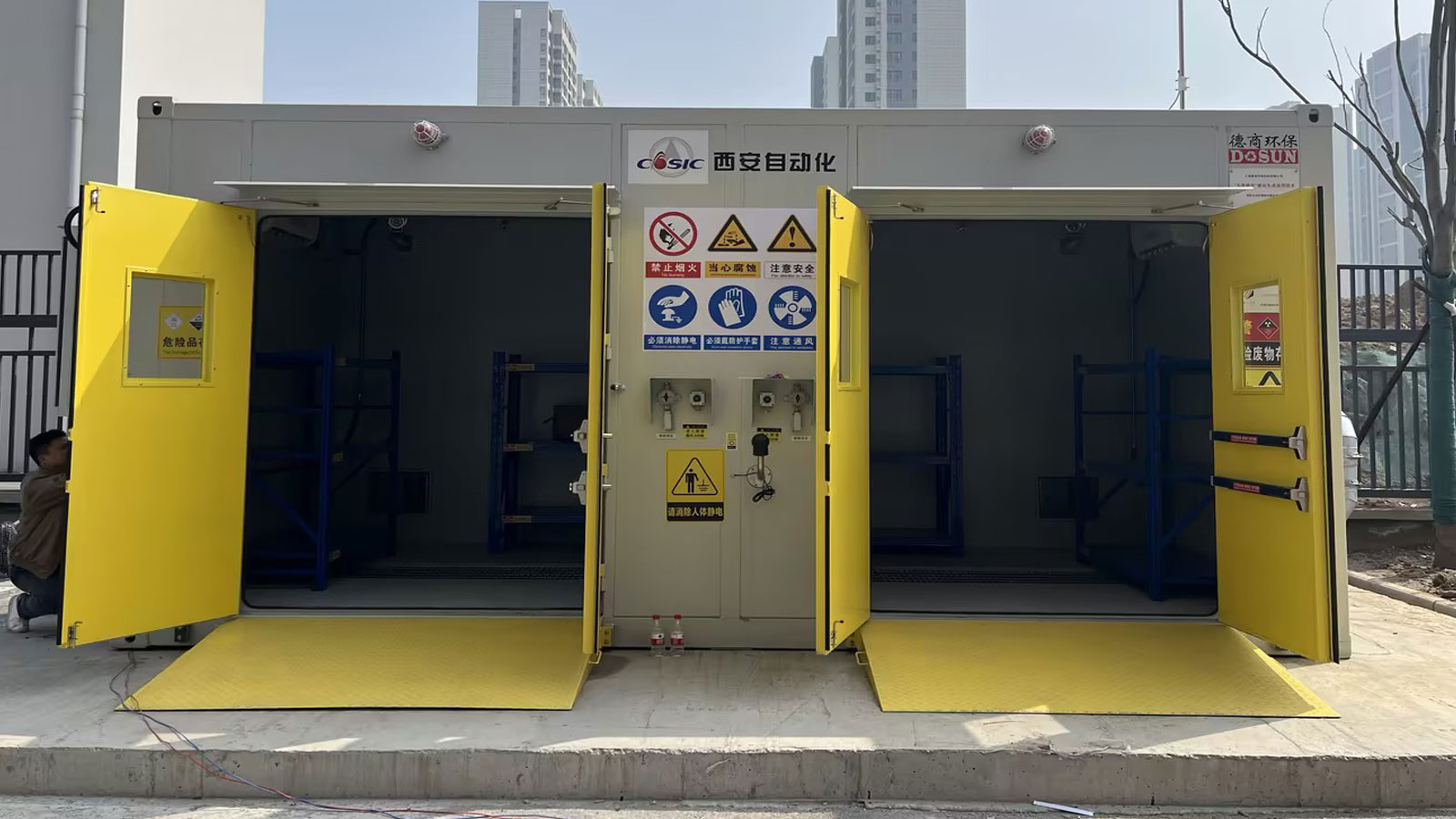
4. Anti-theft, Anti-misoperation and Cross-contamination Prevention: Key to Safety Management
These two items are important contents of hazardous waste storage safety management. The cabinet body shall be equipped with explosion-proof anti-theft locks, and some can adopt double-person double-lock control, matched with intelligent access control and video surveillance to realize traceable access records. At the same time, clear warning signs that meet national standards shall be posted. Different types of hazardous waste shall be stored in separate areas with fire partitions, equipped with special sealed containers and marked with classification to prevent chemical reactions caused by mixed storage.
5. Flood Control, Rain Protection and Special Protection: The Last Line of Defense
Flood control, rain protection and natural disaster prevention cannot be absent. The top of the cabinet body shall be well designed for rain protection, and water retaining weirs shall be set to prevent flood inundation. At the same time, it shall have corresponding seismic capacity to adapt to the seismic intensity requirements of different regions. For special hazardous waste containing radioactivity, additional shielding materials such as lead plates shall be equipped to comply with relevant radiation protection standards.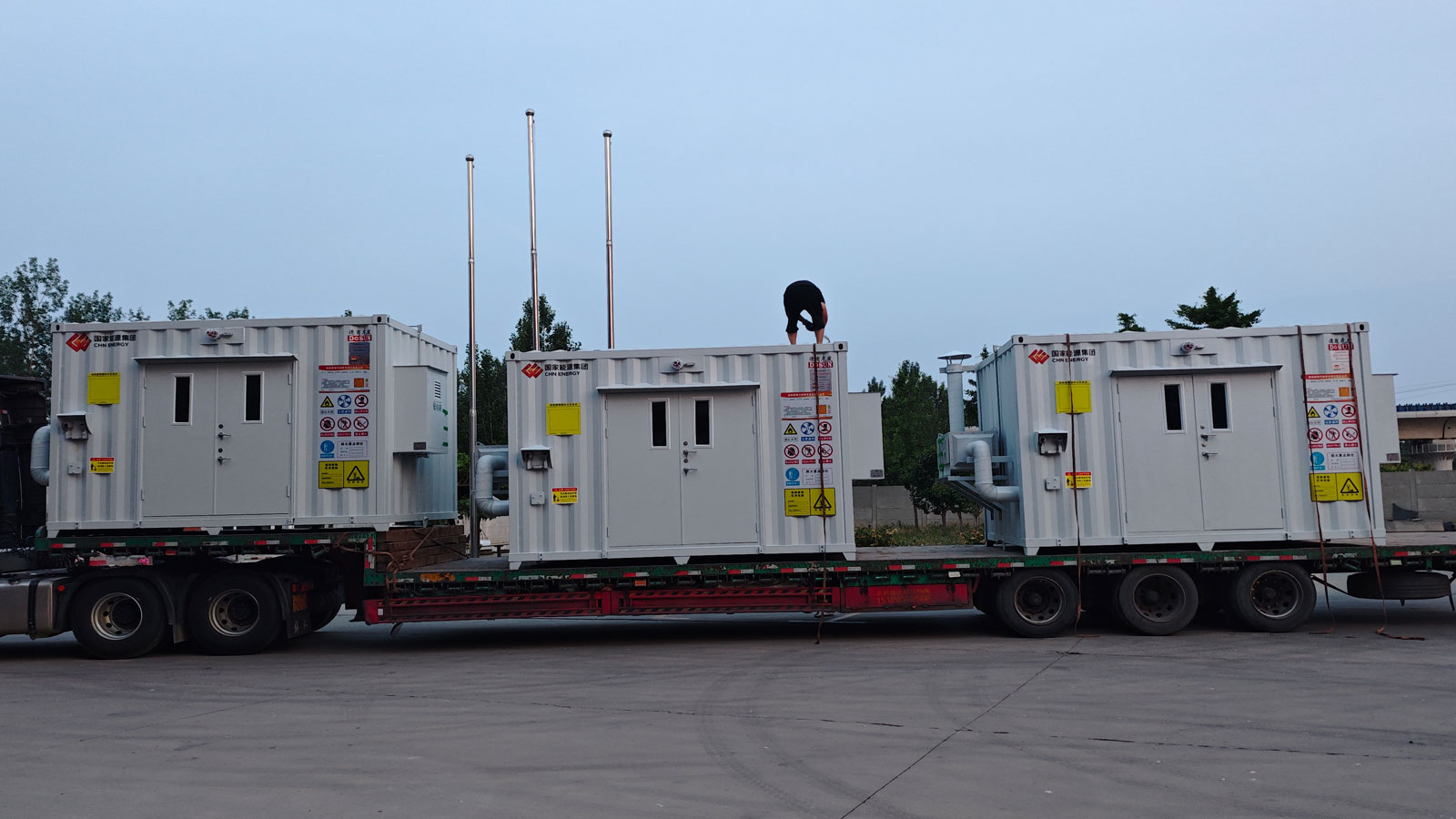
III. Compliance Summary
In summary, the protection of hazardous waste temporary storage cabinets is a comprehensive multi-dimensional system. Explosion-proof, fire-proof and leakage-proof are the foundations, while anti-seepage and anti-corrosion, anti-static and lightning protection, anti-poisoning and anti-volatilization are key supplements. Enterprises must strictly follow relevant standards such as the Standard for Pollution Control on Hazardous Waste Storage (GB 18597-2023) and improve various protection measures to achieve safe storage and compliant operation of hazardous waste, and avoid safety and environmental risks at the source.
 New
New
- 1 Choosing the Right Hazardous Waste Temporary Storage Cabinet Is Only the First Step; Poor Daily Management Still Fails Environmental Protection Inspections 2026-09-16
- 2 DeSUN ECOTECH Intelligent Battery Storage Cabinets Enter German Market; One-Stop Delivery Reinforces Battery Safety Defense 2026-09-09
- 3 New Specifications for Gas Cylinder Storage: Analysis of Intelligent Explosion-Proof Solutions for Both Indoor and Outdoor Scenarios 2026-09-02
- 4 30 Sets of Customized Non-Standard Hazardous Waste Containers Exported to Kazakhstan: Why DeSUN ECOTECH Earns Trust? 2026-08-27
- 5 DeSUN ECOTECH Flammable Liquid Safety Storage Cabinet Passes SGS 90-Minute Fire Test and Earns Type 90 Certification 2026-08-19
 Hot
Hot
- 1 Intelligent Environmental Protection: What Makes a Good Hazardous Waste Temporary Storage Cabinet? DeSUN ECOTECH Provides the Answer 2026-04-15
- 2 Hazardous Waste and General Solid Waste: Comprehensive Analysis of Identification Standards, Treatment Methods and DeSUN ECOTECH Solutions 2026-04-09
- 3 Hazardous Chemicals and Hazardous Waste Temporary Storage Cabinets: How to Choose the Right "Safety Steward"? A Comprehensive Guide to Differences and Selection 2026-04-22
- 4 Safety Standards for Outdoor Gas Cylinder Cabinets: Multi-dimensional Environmental Protection to Build a Strong Defense Line for Outdoor Storage Safety 2026-02-26
- 5 Shanghai DeSUN ECOTECH CO., Ltd – Selected as a 2025 Shanghai "Specialized, Refined, Differential and Innovative (SRDI)" Small and Medium-sized Enterprise 2025-09-04



- About Us Company Profile Corporate Culture Corporate Awards
- Solutions Hazardous Waste Storage Solutions Hazardous Chemical Storage Solutions Gas Cylinder Storage Solutions Battery Storage, Transfer, and Charging Solutions Intelligent Transfer Solutions
- Products Hazardous Waste Storage Cabinets Hazardous Chemical Storage Cabinets Intelligent Gas Cylinder Storage Cabinets Intelligent Battery Storage Cabinets Intelligent Transfer Containers More Products
-
Customer Cases
By Product
Category - News Corporate News Industry News
- Contact Us Contact Us
 沪公网安备31011402021669号
-
 Online Message


- Online Message