

 CN
CN


For a long time, small and micro enterprises (SMEs) such as auto repair shops, small laboratories, and printing factories scattered across streets and alleys have been a persistent "hard nut to crack" in environmental regulation. Although they generate small quantities of hazardous waste like waste engine oil and waste chemicals each time, they face a dilemma: professional hazardous waste disposal companies are reluctant to take their business due to small orders, scattered locations, and high collection and transportation costs; meanwhile, these SMEs themselves cannot afford to build compliant storage facilities, often leaving hazardous waste piled up randomly. This not only poses safety hazards and risks of fines but may even force them to resort to illegal dumping out of desperation.
To solve this nationwide problem, Shaanxi Province launched a pilot program in 2022, with Xianyang City as a pioneer, delivering impressive results: through a series of innovative measures, over 3,500 SMEs in the city have benefited, with a cumulative safe collection and transportation of approximately 4,700 tonnes of hazardous waste, and enterprises have saved an average of 30%-40% in disposal costs.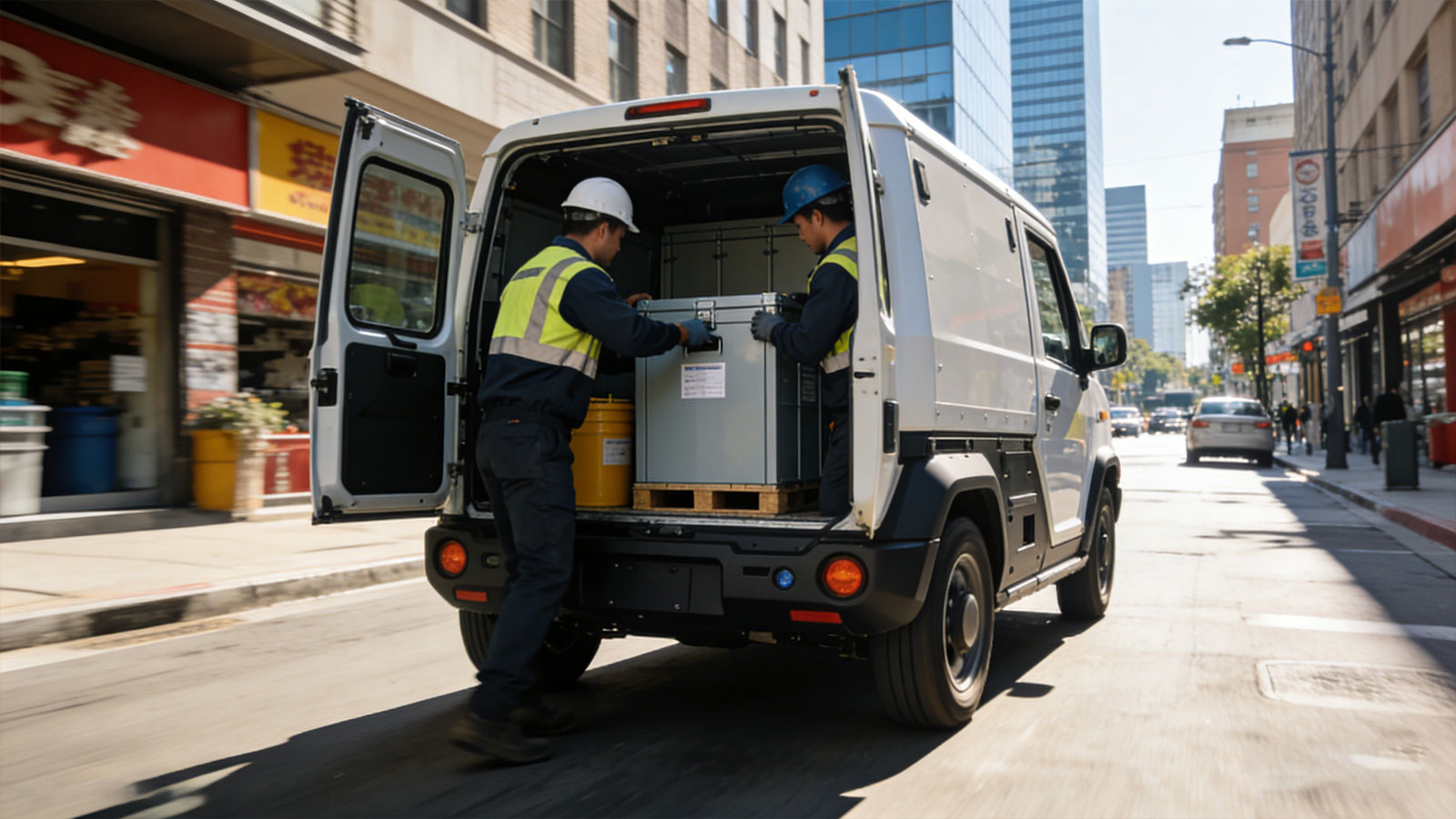
The Core Innovation: The "Xianyang Model" Driven by Two Wheels
Xianyang's success does not rely on a single measure but on a set of interconnected "combination strategies."
Policy "Deregulation" and Tool "Threading the Needle": The pilot first relaxed the collection threshold, clearly targeting SMEs with an annual generation volume of less than 5 tonnes. At the same time, it innovatively introduced "triple-protection vehicles" (防扬散、防渗漏、防流失, i.e., preventing dispersion, leakage, and loss) to replace traditional large hazardous waste transport vehicles. These small, flexible vehicles, like "threads passing through a needle," shuttle through urban areas, solving the key bottlenecks of difficult access to cities and door-to-door collection for hazardous waste transport vehicles, and achieving efficient, low-cost "last-mile" door-to-door collection.
Economically Viable "Packaged" Services: The pilot significantly expanded the scope of collection units' business licenses from the traditional few categories to cover 50 major categories. This means that collection vehicles can recover multiple types of hazardous waste in one door-to-door visit. This "consolidating零散 into whole" and "multi-item group ordering" model has significantly reduced the operational cost per trip, turning the service for SMEs from a "loss-making business" into a sustainable commercial model.
The Key Cornerstone: The Standardization Revolution of "Hazardous Waste Storage Cabinets"
However, flexible transportation and relaxed policies must be based on a safe and standardized starting point. If hazardous waste is still piled up randomly and managed chaotically in source enterprises, the entire collection and transportation system cannot operate efficiently, and safety supervision is even more impossible. Therefore, a crucial and同步推进 (synchronously advanced) basic task in the pilot is to promote the standardization of hazardous waste temporary storage facilities in SMEs.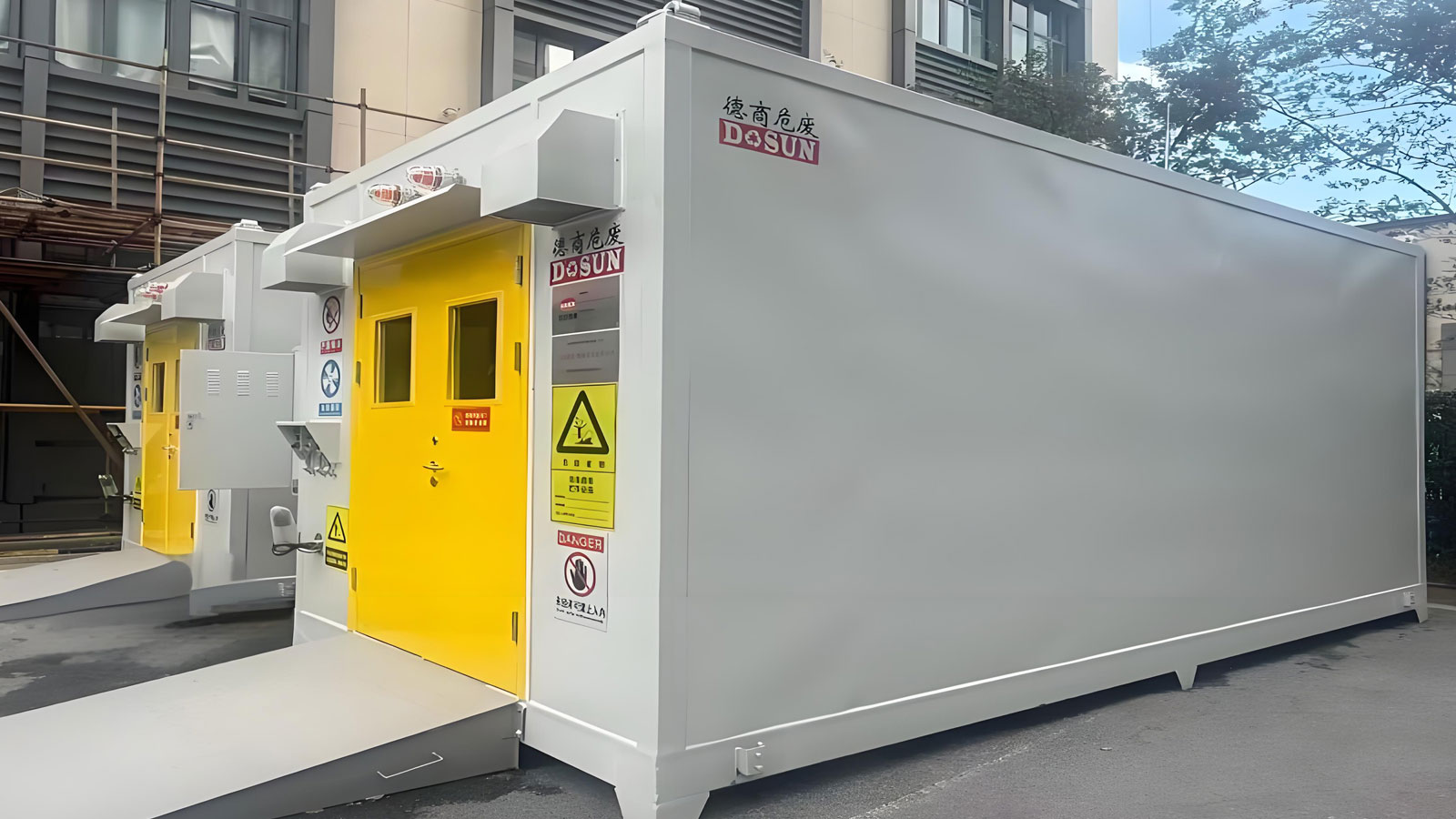
The so-called "hazardous waste storage cabinet" is not a single cabinet model but a set of standardized, regulated temporary storage solutions for hazardous waste. Its core functions are:
From "Random Placement" to "Standardized Storage": Guide enterprises to set up dedicated storage areas or facilities that meet the "three-prevention" (防扬散、防渗漏、防流失) requirements. This is equivalent to providing a safe "temporary harbor" for hazardous waste, completely changing the dangerous state of previous random drum storage in workshop corners or open-air stacking, and eliminating environmental safety risks such as leakage and explosion at the source.
Installing an "Anchor Point" for Smart Supervision: These standardized renovated or constructed storage facilities are the physical foundation of the entire intelligent supervision network. They are closely connected with subsequent links, enabling the status and management of hazardous waste to enter the supervision视野 (field of vision) before leaving the production workshop and being loaded onto "triple-protection vehicles."
The Smart Brain: Visual Supervision Connecting the Entire Chain
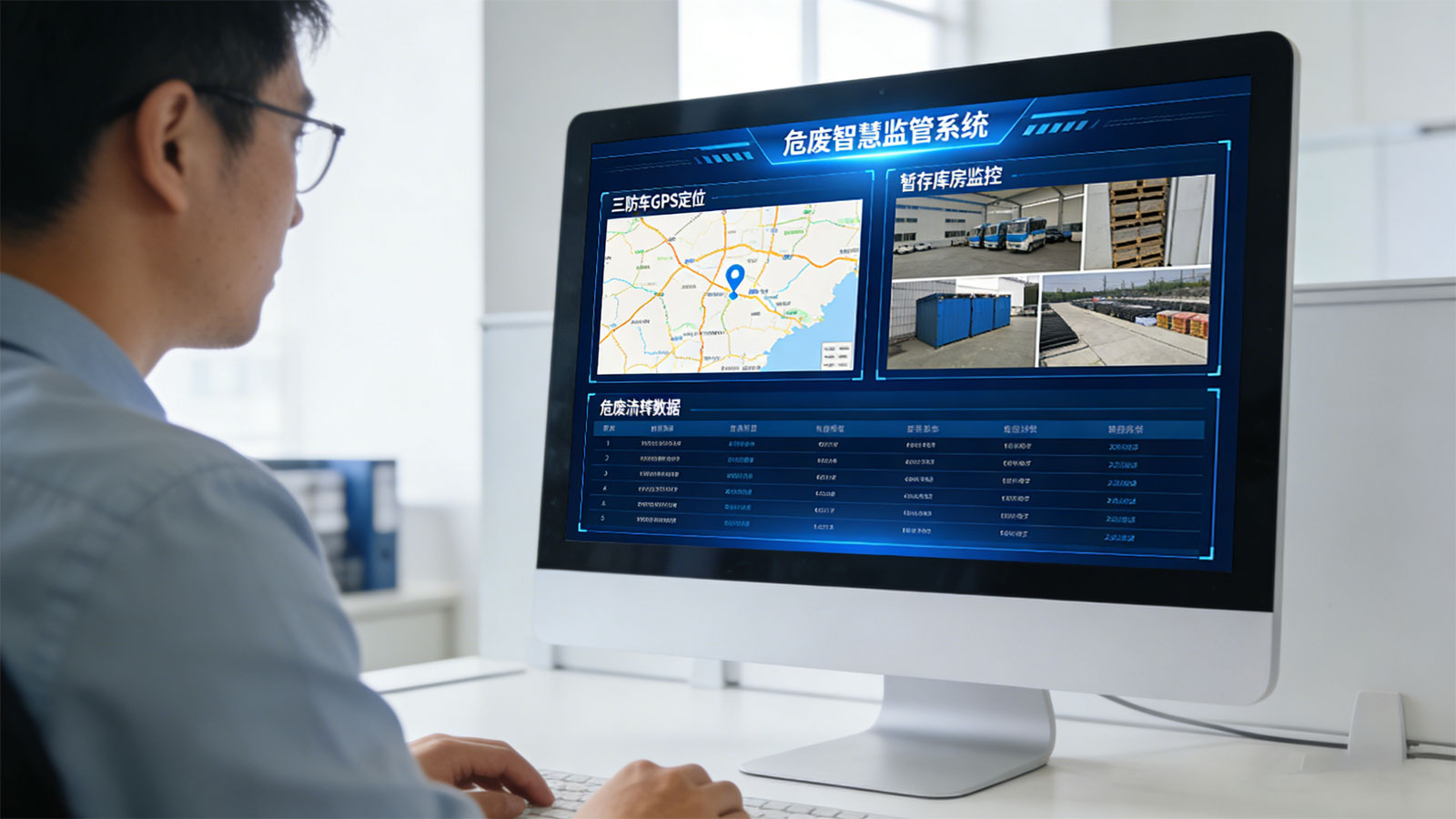
"Triple-protection vehicles" and "storage cabinets" are hardware innovations, but what makes the entire system "come alive" is the intelligent supervision system behind it. Xianyang City established the "Social Source Hazardous Waste Information Management System" and equipped it with a "sky eye" network:
Full-process Visibility: All 31 "triple-protection vehicles" in operation are installed with GPS and video surveillance; video surveillance is also installed in the standard temporary storage warehouses of each collection pilot unit.
Online Circulation: Applications for hazardous waste transfer and electronic manifests are all approved and circulated online.
Data Interconnection: Monitoring data from vehicles and warehouses are interconnected with the management system in real time. In this way, the entire process—from the packaging of hazardous waste in the enterprise's standardized storage facilities, to being weighed and collected by "triple-protection vehicles," entering centralized temporary storage warehouses, and finally being sent to disposal enterprises—achieves closed-loop management that is visible and traceable. Supervisors can check real-time dynamics online, systematically solving the long-standing problems of "difficult collection, transportation, disposal, and supervision."
Conclusion: Replicable Governance Wisdom
Xianyang's pilot experience reveals a clear path: to solve the problem of small and micro hazardous waste governance, it is necessary to coordinate policy innovation (deregulation), tool innovation (triple-protection vehicles), infrastructure innovation (standardized storage facilities), and supervision innovation (smart platforms). Among them, promoting the standardization of "hazardous waste storage cabinets"—though seemingly a low-key basic work— is actually the key cornerstone for building a safety bottom line, connecting smart supervision, and achieving long-term governance. It provides a valuable, replicable grassroots governance sample for the construction of "Zero-Waste Cities."
 New
New
- 1 Choosing the Right Hazardous Waste Temporary Storage Cabinet Is Only the First Step; Poor Daily Management Still Fails Environmental Protection Inspections 2026-09-16
- 2 DeSUN ECOTECH Intelligent Battery Storage Cabinets Enter German Market; One-Stop Delivery Reinforces Battery Safety Defense 2026-09-09
- 3 New Specifications for Gas Cylinder Storage: Analysis of Intelligent Explosion-Proof Solutions for Both Indoor and Outdoor Scenarios 2026-09-02
- 4 30 Sets of Customized Non-Standard Hazardous Waste Containers Exported to Kazakhstan: Why DeSUN ECOTECH Earns Trust? 2026-08-27
- 5 DeSUN ECOTECH Flammable Liquid Safety Storage Cabinet Passes SGS 90-Minute Fire Test and Earns Type 90 Certification 2026-08-19
 Hot
Hot
- 1 Intelligent Environmental Protection: What Makes a Good Hazardous Waste Temporary Storage Cabinet? DeSUN ECOTECH Provides the Answer 2026-04-15
- 2 Hazardous Waste and General Solid Waste: Comprehensive Analysis of Identification Standards, Treatment Methods and DeSUN ECOTECH Solutions 2026-04-09
- 3 Hazardous Chemicals and Hazardous Waste Temporary Storage Cabinets: How to Choose the Right "Safety Steward"? A Comprehensive Guide to Differences and Selection 2026-04-22
- 4 Shanghai DeSUN ECOTECH CO., Ltd – Selected as a 2025 Shanghai "Specialized, Refined, Differential and Innovative (SRDI)" Small and Medium-sized Enterprise 2025-09-04
- 5 Safety Standards for Outdoor Gas Cylinder Cabinets: Multi-dimensional Environmental Protection to Build a Strong Defense Line for Outdoor Storage Safety 2026-02-26



- About Us Company Profile Corporate Culture Corporate Awards
- Solutions Hazardous Waste Storage Solutions Hazardous Chemical Storage Solutions Gas Cylinder Storage Solutions Battery Storage, Transfer, and Charging Solutions Intelligent Transfer Solutions
- Products Hazardous Waste Storage Cabinets Hazardous Chemical Storage Cabinets Intelligent Gas Cylinder Storage Cabinets Intelligent Battery Storage Cabinets Intelligent Transfer Containers More Products
-
Customer Cases
By Product
Category - News Corporate News Industry News
- Contact Us Contact Us
 沪公网安备31011402021669号
-
 Online Message


- Online Message