

 CN
CN


Recently, the Nagqu Municipal Centralized Hazardous Waste Collection and Storage Center—backed by a 7 million yuan investment—was officially commissioned. Funded by Tibet XX Environmental Protection Service Co., Ltd., the project sees daily operations overseen by its wholly-owned subsidiary, Tibet XX Environmental Protection Service Co., Ltd. With Seni District as its core service hub, it adopts the innovative "small-batch accumulation, bulk withdrawal" model to cater to the disposal needs of scattered, low-volume hazardous waste locally.
The center achieves an annual throughput of 5,000 tons of waste engine oil and 2,000 tons of waste lead-acid batteries. Beyond shortening transport distances and reducing safety risks, it fills the gap in centralized hazardous waste collection and storage in Nagqu, fortifying the ecological defense of the plateau.
Yet while Nagqu’s practice sets a large-scale benchmark for hazardous waste management, it is hardly replicable nationwide.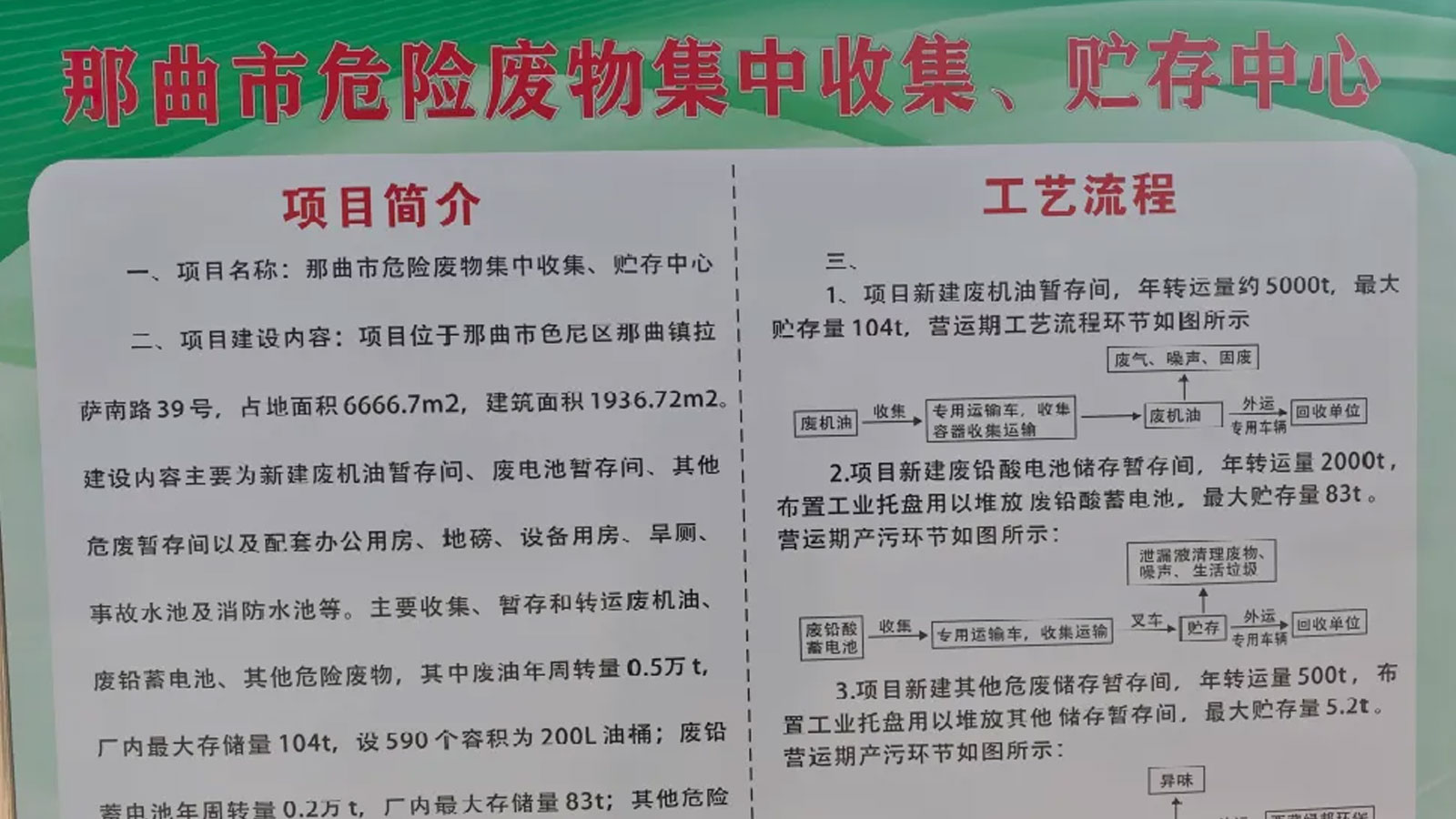
The establishment of this centralized center is underpinned by substantial support: 7 million yuan in funding, a 6,666.7-square-meter site, and a steady throughput of hazardous waste.
In reality, however, countless county-level towns, townships, and small and medium-sized enterprises (SMEs) grapple with three key challenges:
Financially: Most SMEs lack the capital to invest millions of yuan in construction, let alone cover costs for supporting facilities like weighbridges and emergency water tanks.
In output: Many auto repair shops and small factories produce just a few barrels of waste engine oil or dozens of waste batteries monthly—well below the operational scale required for centralized centers.
In space: SMEs have limited factory premises and cannot allocate space for dedicated hazardous waste storage workshops whatsoever.
Neglecting temporary hazardous waste storage amid these challenges can lead to haphazard stacking and illegal transport—only exacerbating ecological risks.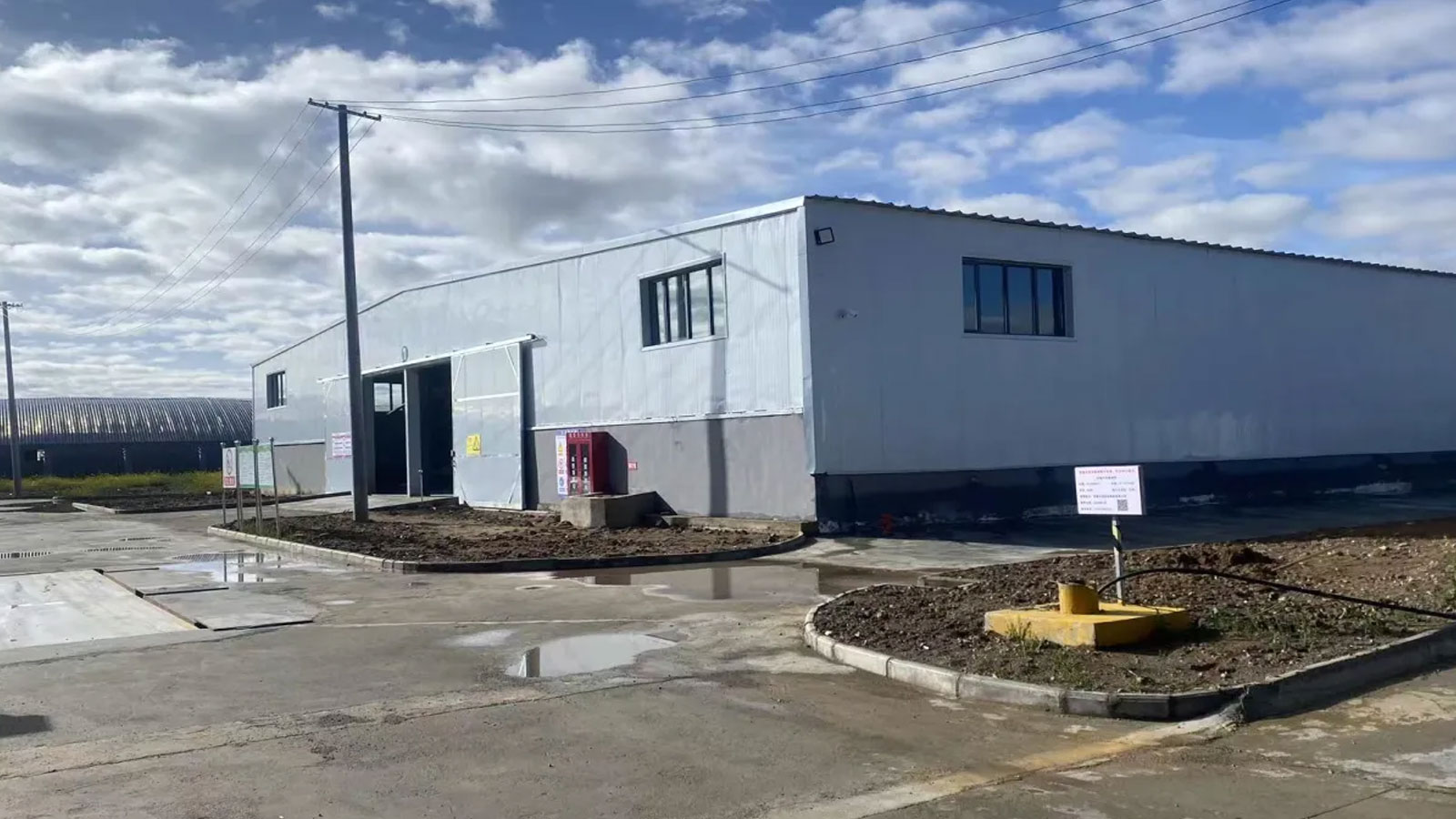
At such a juncture, hazardous waste temporary storage cabinets emerge as a practical "optimal solution," precisely addressing the waste management hurdles faced by small and medium-sized entities.
Cost-wise: These cabinets eliminate the need for large-scale infrastructure investment. A single unit costs just a "fraction" of a centralized center, and SMEs avoid bearing supporting facility expenses—significantly lowering the entry barrier for hazardous waste management.
In capacity flexibility: Cabinets come in multiple specifications, from small (dozens of liters) for waste batteries to large (hundreds of liters) for waste engine oil. They can be selected based on an enterprise’s hazardous waste volume; even small town shops generating just a few kilograms monthly can achieve standardized storage, no longer delaying disposal to "accumulate enough volume."
In space adaptability: Compact in design, these cabinets fit directly in factory corners or designated areas, requiring no large land parcels. Even entities in remote areas can deploy them with ease.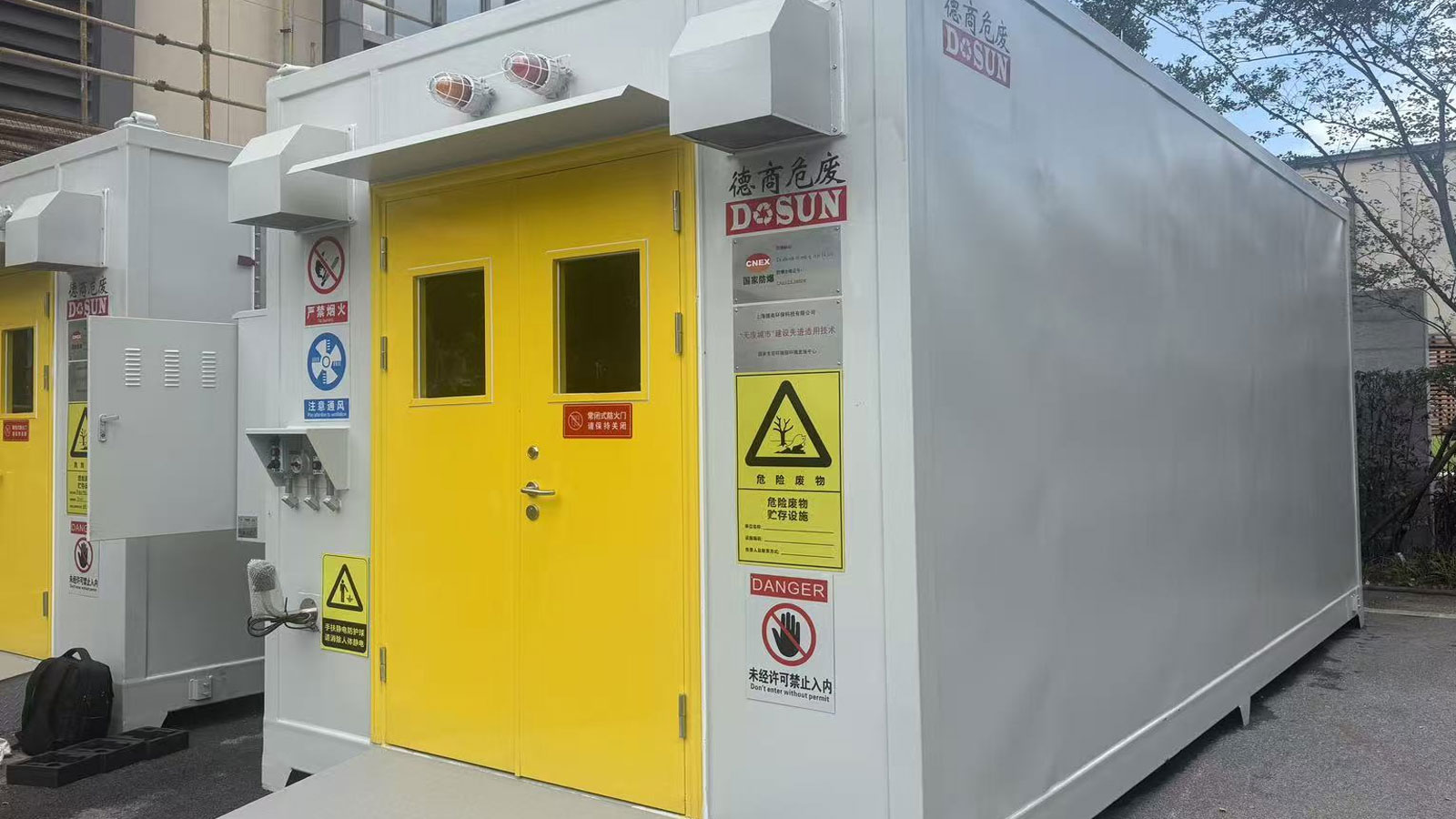
More critically, qualified hazardous waste temporary storage cabinets fully meet regulatory compliance standards. They strictly conform to the Standards for Pollution Control on Hazardous Waste Storage (GB 18597-2023), featuring anti-leakage, anti-corrosion, rainproof, and anti-dispersion capabilities. Some are even outfitted with waste gas collection systems. For example, auto repair businesses use waste engine oil cabinets for sealed storage, preventing leakage and ground contamination; electronics factories rely on waste battery cabinets to classify and isolate heavy metals, mitigating leakage risks—ensuring enterprises avoid environmental penalties through compliant operations.
The Nagqu Municipal Centralized Hazardous Waste Center serves as the "main artery" for large-scale management, whereas temporary storage cabinets act as the "capillaries" for refined coverage. Leveraging their "small size, high efficiency" advantages, they empower entities with limited capital, low output, and inadequate space to engage in hazardous waste management. They are not only "micro-barriers" for ecological protection but also a robust tool to advance the expansion of "zero-waste city" initiatives to the grassroots.
 New
New
- 1 Choosing the Right Hazardous Waste Temporary Storage Cabinet Is Only the First Step; Poor Daily Management Still Fails Environmental Protection Inspections 2026-09-16
- 2 DeSUN ECOTECH Intelligent Battery Storage Cabinets Enter German Market; One-Stop Delivery Reinforces Battery Safety Defense 2026-09-09
- 3 New Specifications for Gas Cylinder Storage: Analysis of Intelligent Explosion-Proof Solutions for Both Indoor and Outdoor Scenarios 2026-09-02
- 4 30 Sets of Customized Non-Standard Hazardous Waste Containers Exported to Kazakhstan: Why DeSUN ECOTECH Earns Trust? 2026-08-27
- 5 DeSUN ECOTECH Flammable Liquid Safety Storage Cabinet Passes SGS 90-Minute Fire Test and Earns Type 90 Certification 2026-08-19
 Hot
Hot
- 1 Intelligent Environmental Protection: What Makes a Good Hazardous Waste Temporary Storage Cabinet? DeSUN ECOTECH Provides the Answer 2026-04-15
- 2 Hazardous Waste and General Solid Waste: Comprehensive Analysis of Identification Standards, Treatment Methods and DeSUN ECOTECH Solutions 2026-04-09
- 3 Hazardous Chemicals and Hazardous Waste Temporary Storage Cabinets: How to Choose the Right "Safety Steward"? A Comprehensive Guide to Differences and Selection 2026-04-22
- 4 Safety Standards for Outdoor Gas Cylinder Cabinets: Multi-dimensional Environmental Protection to Build a Strong Defense Line for Outdoor Storage Safety 2026-02-26
- 5 Shanghai DeSUN ECOTECH CO., Ltd – Selected as a 2025 Shanghai "Specialized, Refined, Differential and Innovative (SRDI)" Small and Medium-sized Enterprise 2025-09-04



- About Us Company Profile Corporate Culture Corporate Awards
- Solutions Hazardous Waste Storage Solutions Hazardous Chemical Storage Solutions Gas Cylinder Storage Solutions Battery Storage, Transfer, and Charging Solutions Intelligent Transfer Solutions
- Products Hazardous Waste Storage Cabinets Hazardous Chemical Storage Cabinets Intelligent Gas Cylinder Storage Cabinets Intelligent Battery Storage Cabinets Intelligent Transfer Containers More Products
-
Customer Cases
By Product
Category - News Corporate News Industry News
- Contact Us Contact Us
 沪公网安备31011402021669号
-
 Online Message


- Online Message