

 CN
CN


Since the beginning of this year, Ma'anshan City in Anhui Province has consistently prioritized the management of solid and hazardous waste, strengthened measures, and focused on building a full-chain, multi-dimensional management system to effectively prevent environmental risks and safeguard the ecological security of the Yangtze River Basin.
I. Deepen Assessment and Guidance, Consolidate the Foundation of Standardized Management.
Issued the "Notice on Implementing the Rectification of Issues Identified in the 2024 Provincial Assessment Report on Standardized Environmental Management of Hazardous Waste," conducting a "comprehensive" standardized assessment for 87 key hazardous waste generating enterprises and management units city-wide to accurately identify management gaps.
Simultaneously explored new intelligent supervision models, promoting the completion of whole-process information system upgrades by 93 key hazardous waste enterprises. This achieved traceability throughout the entire process of hazardous waste generation, transfer, and disposal, enhancing the refinement of management.
In the entire process of hazardous waste generation, transfer, and disposal, "transfer" is the core hub connecting upstream generation and downstream disposal, while temporary storage and turnover are the two critical nodes within the transfer link, directly determining the safety and compliance of hazardous waste management.
Temporary Storage of Hazardous Waste is categorized into two types: storage at the generating unit and temporary storage during transfer.
Generating units must establish dedicated temporary storage rooms in accordance with the "Standard for Pollution Control on Hazardous Waste Storage," ensuring measures against leakage, scattering, and loss. The maximum temporary storage period for a single category of hazardous waste must not exceed one year (extensions require approval from the environmental protection department).
If temporary storage during transfer is necessary due to reasons like transport delays, it must occur at qualified transfer/storage facilities. Storing in unprotected ordinary sites is strictly prohibited, and 24-hour dedicated personnel supervision is required.
The temporary storage link requires establishing a "one-item, one-record" system, detailing the hazardous waste category, quantity, in/out time, and responsible personnel to ensure traceability.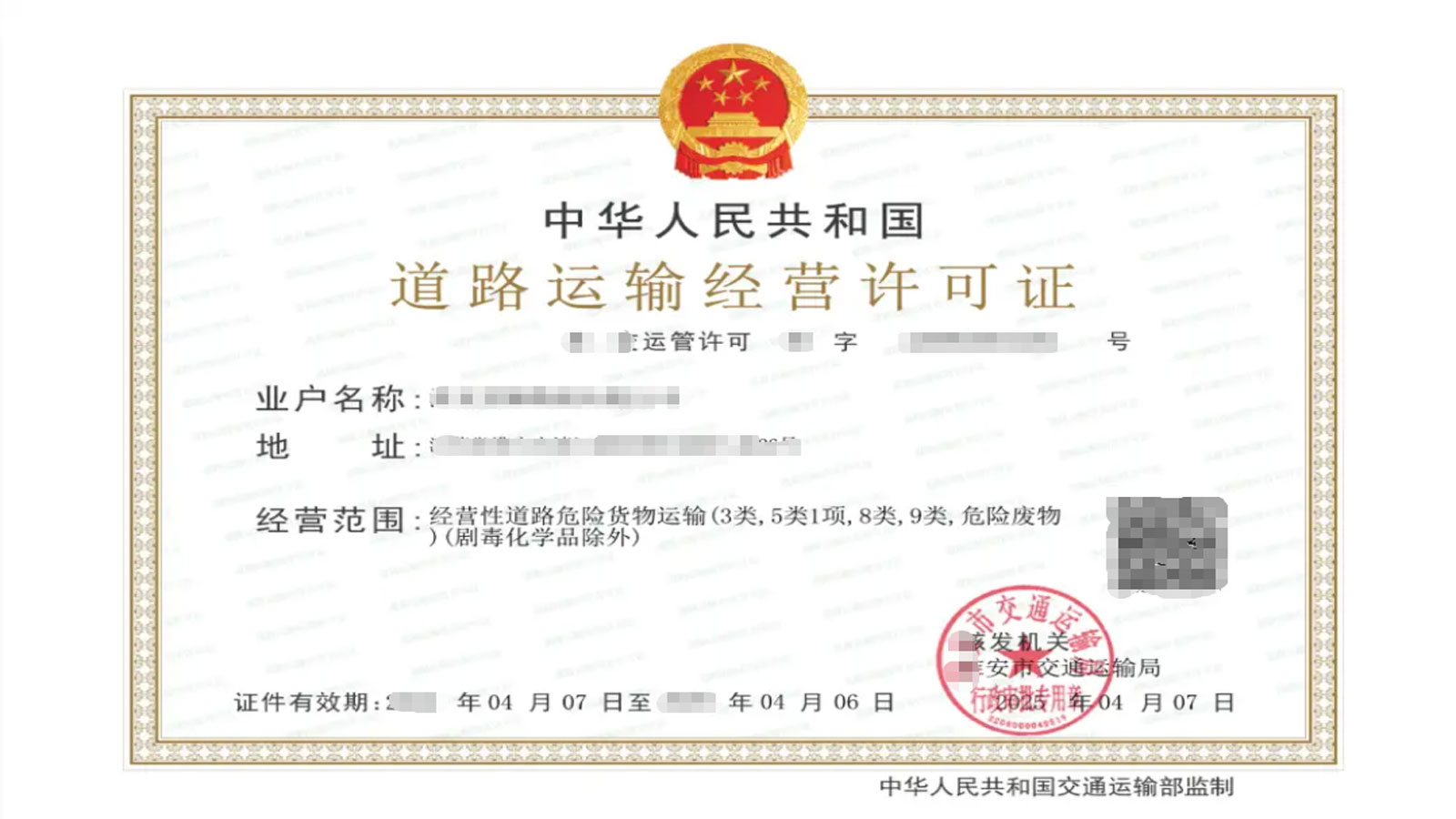
Hazardous Waste Turnover focuses on the management of the transportation process across regions or between units.
Firstly, enterprises holding a "Road Transport License for Hazardous Waste" must be selected. Transport vehicles must be equipped with GPS positioning, anti-leakage devices, and emergency supplies.
Secondly, turnover routes must be planned in advance, avoiding sensitive areas such as water source areas and residential communities. Transport schedules should also avoid extreme weather conditions like high temperatures and heavy rain.
Finally, the "Hazardous Waste Manifest" system (electronic or paper) must be strictly implemented. The generating unit, transport unit, and disposal unit must verify and sign at each step. Manifests must be kept for at least 5 years to prevent issues like "mid-route dumping" and "discrepancies between records and actual goods."
The seamless connection between temporary storage and turnover is the core requirement of the transfer link. This requires real-time synchronization of storage inventory and transport trajectory information through digital management, ensuring a "closed-loop, full-chain" process for hazardous waste from generation to disposal, thereby preventing environmental risks.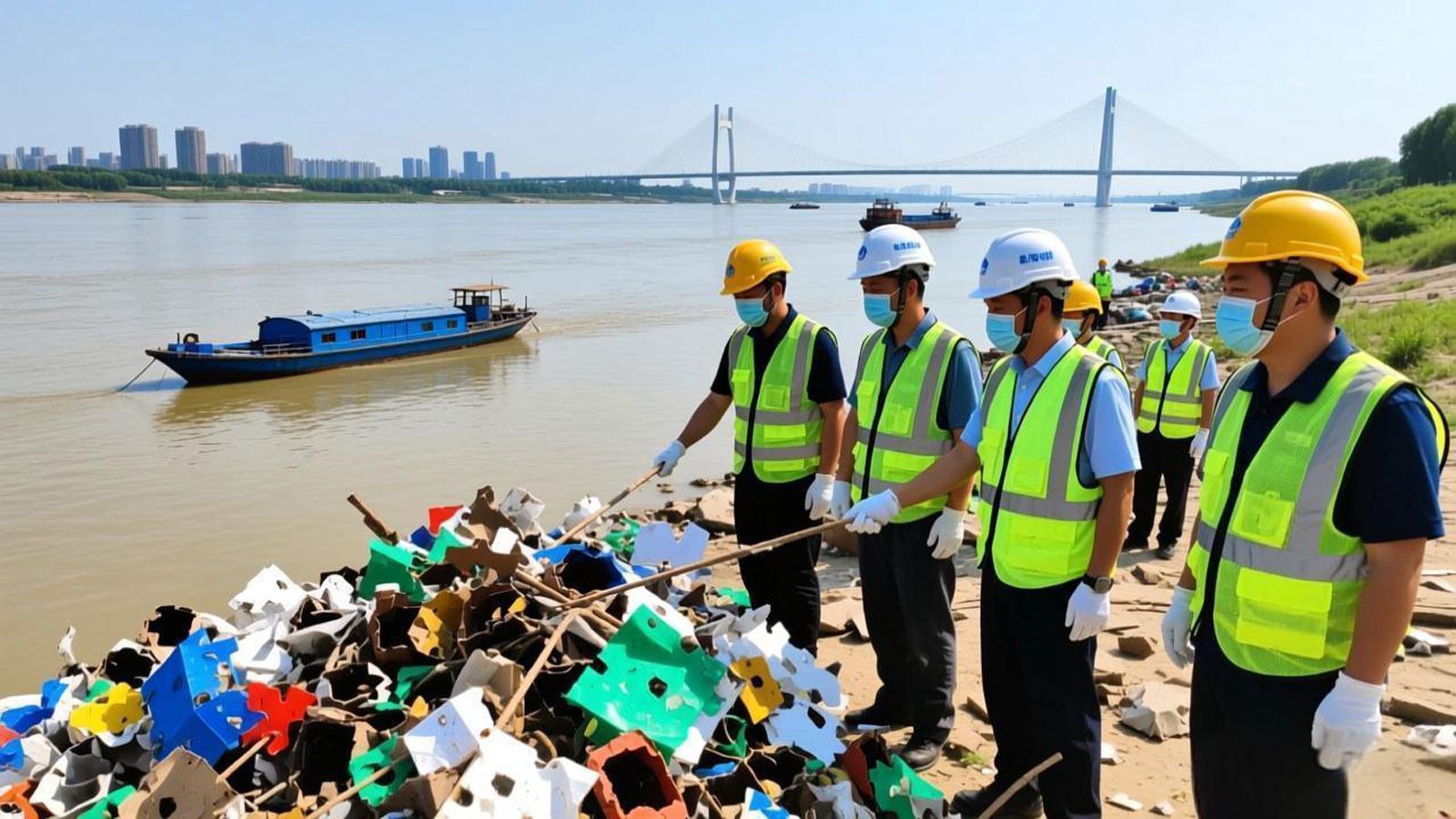
II. Strengthen Daily Supervision, Weave a Tight Risk Prevention and Control Network.
Focused on key links of solid and hazardous waste storage and disposal, carried out regular hidden hazard investigations: organized special inspections of formal stacking sites for typical bulk industrial solid waste; strictly reviewed administrative permits for hazardous waste management units; and conducted regular pollution risk inspections for 14 tailings ponds, dynamically clearing environmental risks.
As of now, 27 environmental hazards related to hazardous waste have been identified and eliminated. The city has efficiently completed the preliminary review for 29 cross-provincial transfers of solid waste, ensuring comprehensive supervision without blind spots and early risk prevention and control.
III. Promote Effective Remediation, Maintain a High-Pressure Stance of Strict Supervision.
Cracked down severely on environmental illegal activities such as the illegal dumping and disposal of solid waste. Since the start of the year, 4 administrative penalty cases related to hazardous waste under solid waste regulations have been handled, with fines totaling 673,000 RMB. All 10 public complaints related to solid waste have been resolved, effectively addressing public concerns.
Actively carried out the 2025 "Cleanup Action for Solid Waste in the Yangtze River Basin." To date, rectification tasks for 15 problem sites across 3 batches have been completed, effectively curbing the risk of solid waste pollution and protecting the Yangtze River's ecological environment.
 New
New
- 1 Choosing the Right Hazardous Waste Temporary Storage Cabinet Is Only the First Step; Poor Daily Management Still Fails Environmental Protection Inspections 2026-09-16
- 2 DeSUN ECOTECH Intelligent Battery Storage Cabinets Enter German Market; One-Stop Delivery Reinforces Battery Safety Defense 2026-09-09
- 3 New Specifications for Gas Cylinder Storage: Analysis of Intelligent Explosion-Proof Solutions for Both Indoor and Outdoor Scenarios 2026-09-02
- 4 30 Sets of Customized Non-Standard Hazardous Waste Containers Exported to Kazakhstan: Why DeSUN ECOTECH Earns Trust? 2026-08-27
- 5 DeSUN ECOTECH Flammable Liquid Safety Storage Cabinet Passes SGS 90-Minute Fire Test and Earns Type 90 Certification 2026-08-19
 Hot
Hot
- 1 Intelligent Environmental Protection: What Makes a Good Hazardous Waste Temporary Storage Cabinet? DeSUN ECOTECH Provides the Answer 2026-04-15
- 2 Hazardous Waste and General Solid Waste: Comprehensive Analysis of Identification Standards, Treatment Methods and DeSUN ECOTECH Solutions 2026-04-09
- 3 Hazardous Chemicals and Hazardous Waste Temporary Storage Cabinets: How to Choose the Right "Safety Steward"? A Comprehensive Guide to Differences and Selection 2026-04-22
- 4 Shanghai DeSUN ECOTECH CO., Ltd – Selected as a 2025 Shanghai "Specialized, Refined, Differential and Innovative (SRDI)" Small and Medium-sized Enterprise 2025-09-04
- 5 Safety Standards for Outdoor Gas Cylinder Cabinets: Multi-dimensional Environmental Protection to Build a Strong Defense Line for Outdoor Storage Safety 2026-02-26



- About Us Company Profile Corporate Culture Corporate Awards
- Solutions Hazardous Waste Storage Solutions Hazardous Chemical Storage Solutions Gas Cylinder Storage Solutions Battery Storage, Transfer, and Charging Solutions Intelligent Transfer Solutions
- Products Hazardous Waste Storage Cabinets Hazardous Chemical Storage Cabinets Intelligent Gas Cylinder Storage Cabinets Intelligent Battery Storage Cabinets Intelligent Transfer Containers More Products
-
Customer Cases
By Product
Category - News Corporate News Industry News
- Contact Us Contact Us
 沪公网安备31011402021669号
-
 Online Message


- Online Message